


Capacity planning is important for organizations to figure out what resources are required by them to satisfy existing as well as future demand without disruptions and extra costs.
This includes evaluating the organization’s existing resources, estimating the demand, finding the capacity gap, and making changes to increase the efficiency and productivity of the organization.
Organizations make use of various capacity planning techniques to effectively handle their workloads and resources.
The blog post discusses the definition, significance, types, process, advantages, techniques, examples, and difference between capacity planning and resource planning.
Why Capacity Planning Is Important for Companies?
Capacity planning ensures that a business is capable of providing sufficient capacity to meet its current and future demands. The planning helps the company to control its workforce, facilities, equipment, and production capacity effectively.
The Importance of capacity planning for companies:
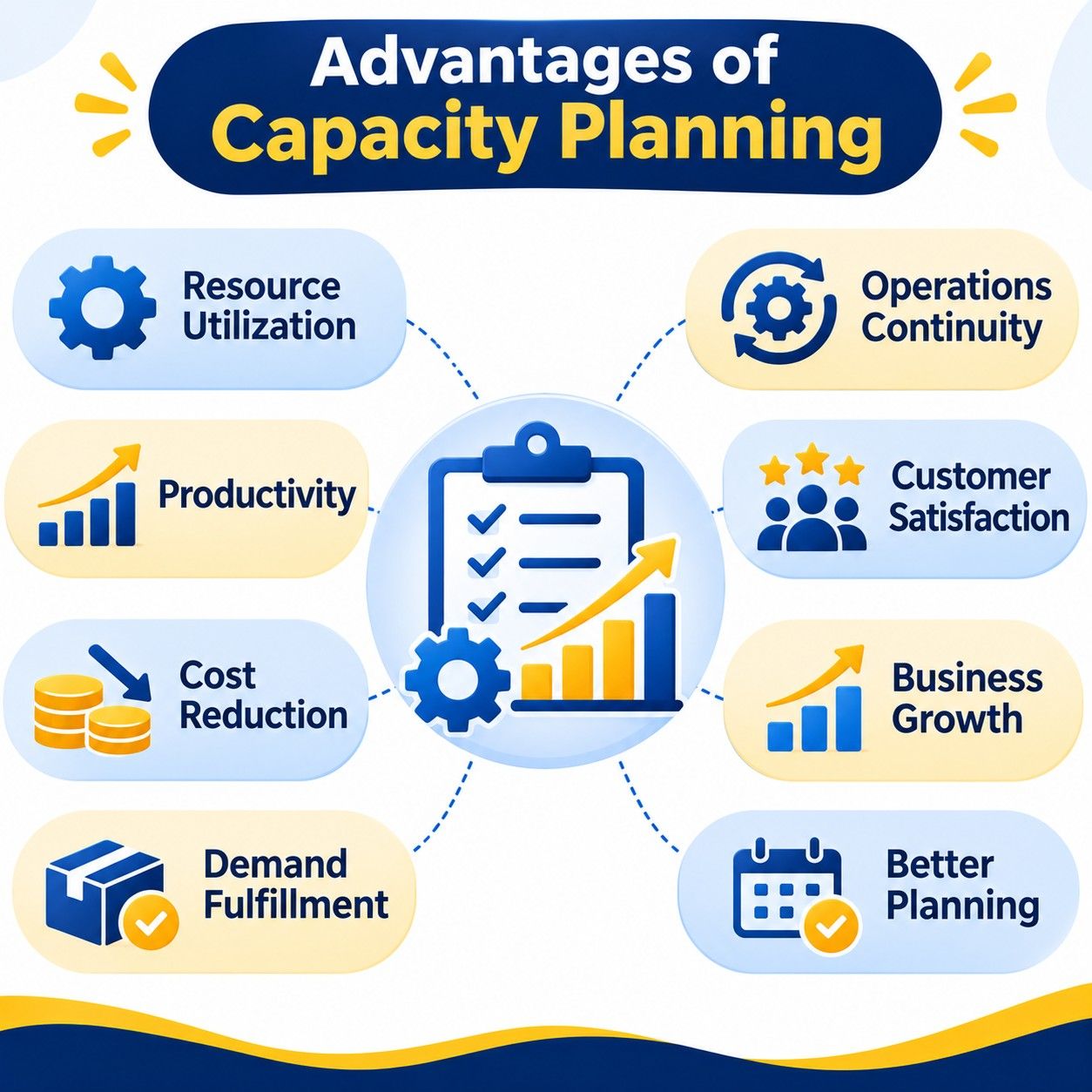
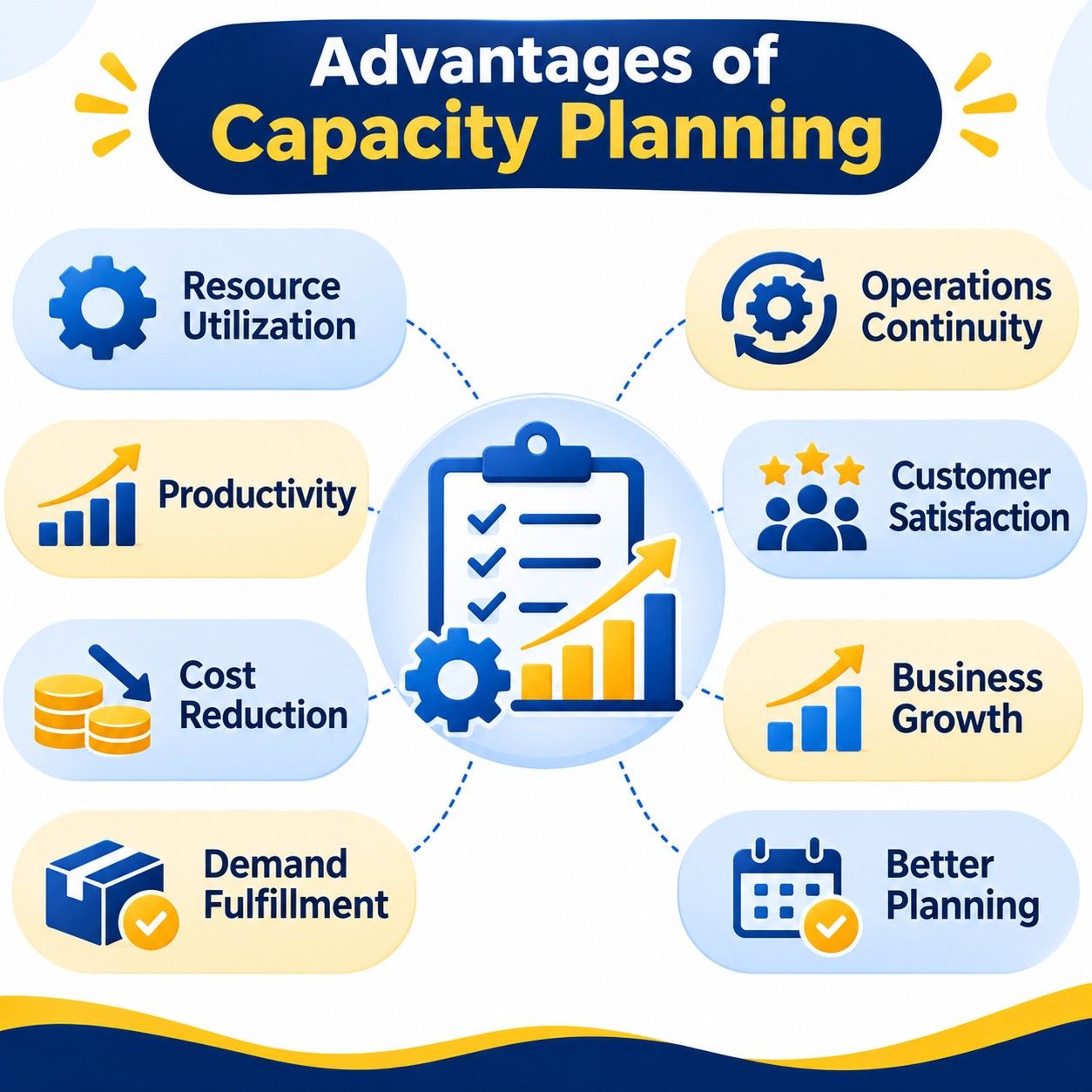
Effective Resource Allocation: Assists organizations in making effective use of available human resources, machines, materials, and facilities without wastage of resources.
Increased Productivity: Ensures that the team has all the necessary resources in order to complete the tasks and achieve organizational goals within deadlines.
Cost Control: Assists in controlling cost in operations by avoiding overstaffing, overstocking, and wastage of investment in machines.
Demand Forecasting: Helps organizations to cope up with changes in customer demand.
Operational Risk Reduction: Helps in identifying capacity gaps and risks of any kind before they create problems in organizational operations.
Organizational Growth: Assists organizations in planning their future needs and investments to expand their operations.
Effective Decision Making: Helps in decision-making by providing useful information on resource requirements and production capacities.
What are the Different Types of Capacity Planning?
There can be various types of capacity planning depending on how businesses plan and react to demand changes through managing resources. All types of capacity planning follow a particular methodology in aligning their capacity with business requirements. Businesses can choose an appropriate method considering their industries, workloads, production demands, and long-term strategies.
The major types of capacity planning include:
Lead Capacity Planning: Businesses expand their capacity prior to anticipating future demand. This type of capacity planning helps in preparation for increasing customer demand, business growth, or even seasonal demand.
Lag Capacity Planning: Businesses expand their capacity when there is an increase in demand, and their current resources become inadequate. This type of capacity planning helps in avoiding any waste of money but can lead to delays while facing sudden demand changes.
Match Capacity Planning: Businesses gradually change their capacity with respect to demand. It helps ensure that there is equilibrium between resource availability and customer demands.
Adjustment Capacity Planning: Businesses periodically make adjustments in their resources considering the operational demands and market dynamics. It may involve the employment of additional staff members, upgrades in machines, or production scheduling.
Capacity Planning Process Steps
Capacity planning process consists of identifying business needs, evaluating current resources and preparing for future demand. This process will help organizations in understanding whether their current capacity, including number of employees, equipment, infrastructure and capability, is enough to meet the business needs. The capacity planning process includes the following steps:
1. Evaluation of Current Capacity: Assessment of the currently available resources which include the personnel, equipment, technologies, infrastructure and production capabilities. Identification of any limitation or under-utilization of resources is done at this step.
2. Prediction of Future Demand: Future business needs are determined by analyzing demand of the customers, market trend, historical data, seasonal changes and business growth expectations.
3. Identification of Gap Between Current and Future Demand: Comparison of current and future demand helps in determining the shortage of resources or excess capacity.
4. Creation of Capacity Plan: Development of the plan in order to close any gap identified at the previous step. At this step it may become necessary to hire new employees, purchase new equipment, upgrade technologies, outsource certain tasks and/or improve the processes.
5. Resources Allocation: Allocation of resources among departments and business activities.
6. Put the Plan into Action: Implement the suggested changes according to the predetermined time frame and budgetary estimates. It is important that everyone understands his/her roles.
7. Measure the Results: Measure how well the resources are being utilized, production, cost of operations, as well as actual demand. Make appropriate changes if necessary.