Cash Conversion Cycle (CCC) is an indicator that determines the time period taken by an organization to convert investments in inventories and other business activities into cash through their customers.
It helps organizations gauge the efficiency of cash flow management, working capital management, inventory movement, and late customer payments and supplier transactions.
A shorter cash conversion cycle shows the efficient cash flow management process whereas a longer cash conversion cycle implies inefficiency in the business process and more working capital needs.
This blog explains the cash conversion cycle formula, calculation, phases, importance, examples, and tips to optimize cash flow efficiency.
What Is the Importance of the Cash Conversion Cycle?
Cash conversion cycle is important since it gives a clear idea of how fast an organization can be able to recover its investment in inventories as well as other resources back into cash. It assists in the efficient management of working capital and the short-term financial requirements. Generally, the shorter the cash conversion cycle, the better cash flow and business operations.
Main importance of the cash conversion cycle includes the following:
Improves Cash Flow Management: Assists in measuring the speed at which cash is recovered from sales making it easier for cash flow management.
Optimizes Working Capital: Assists in measuring how much of money is being tied in inventory and receivables making it easier to optimize the working capital of the business.
Highlights Operational Inefficiencies: Assists in identifying inefficiencies in inventory management, accounts payable, and receivable processes.
Financial Planning: Assists organizations in planning and estimating short-term financial requirements for investment and expenditures.
Enhances Business Liquidity: Helps in accessing cash faster to ensure sufficient financial liquidity.
What Is the Cash Conversion Cycle Formula?
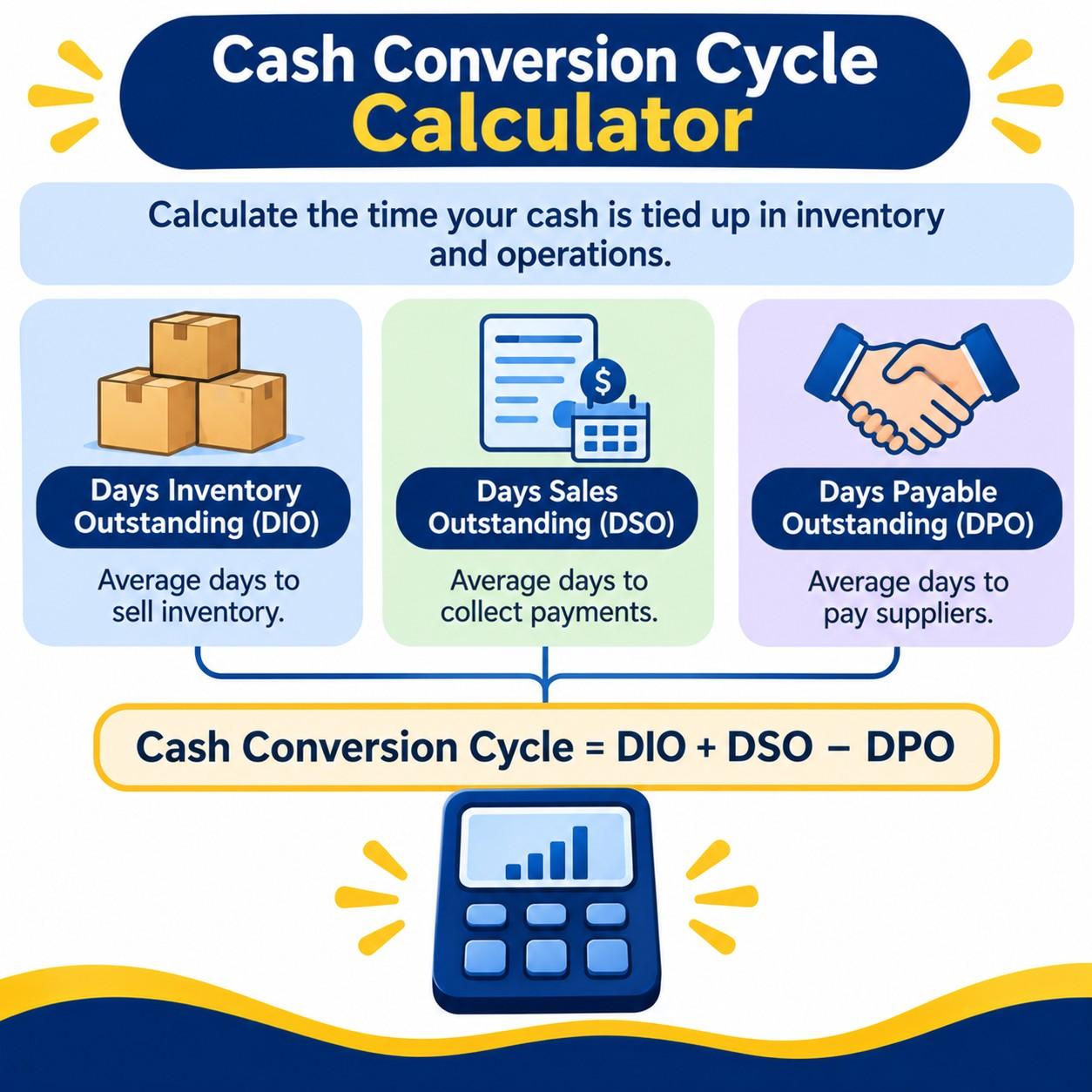
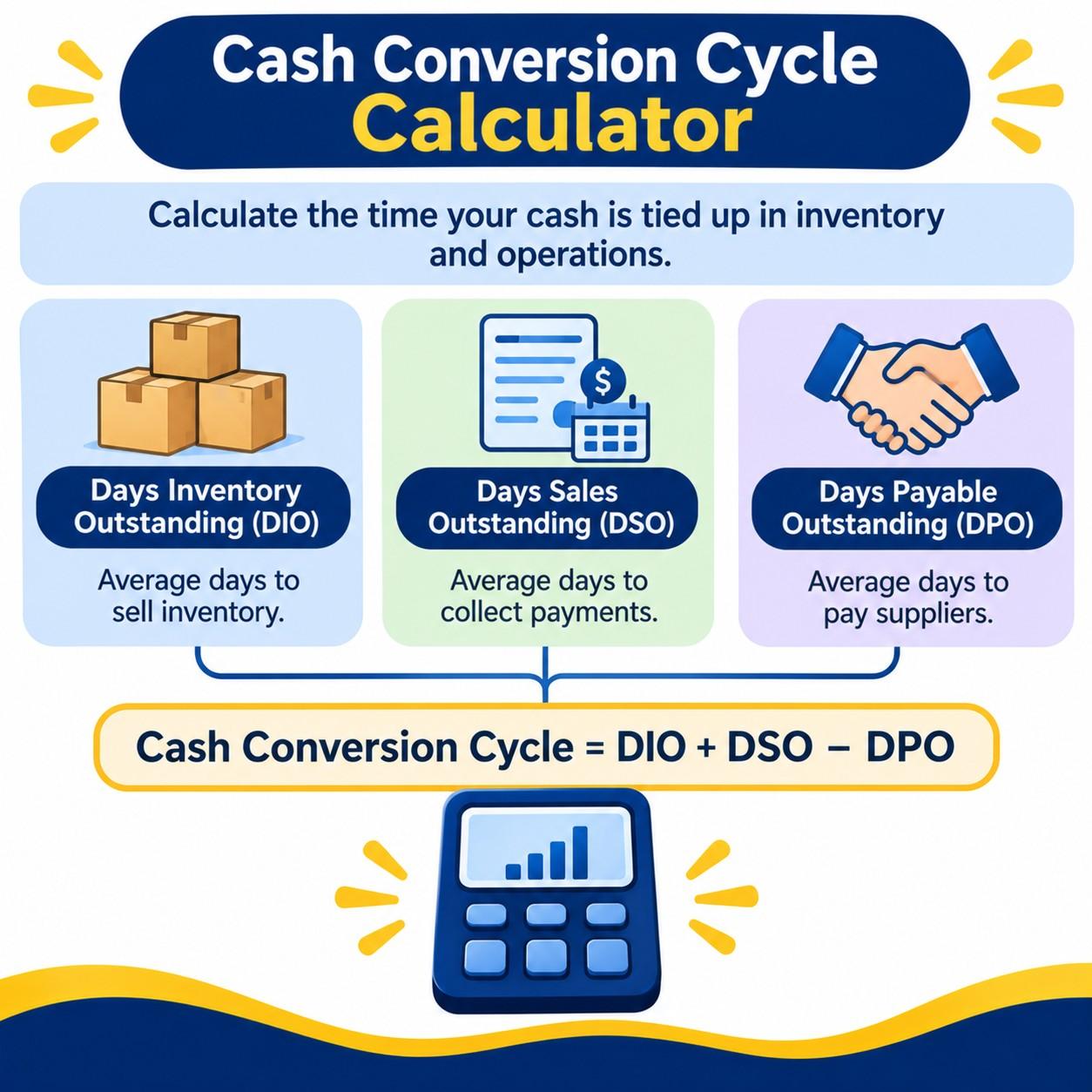
Cash conversion cycle formula indicates the period a company spends in converting its investment in inventory into cash flows received from its clients. Three key factors are used in the calculation of cash conversion cycle formula which include: Days Inventory Outstanding (DIO), Days Sales Outstanding (DSO) and Days Payable Outstanding (DPO). This formula allows companies to measure how well they manage their inventory, collections, and payments.
The cash conversion cycle formula is:
CCC = DIO + DSO - DPO
Where:
Days Inventory Outstanding (DIO): Represents the average period a company needs to sell its inventory.
Days Sales Outstanding (DSO): Indicates the average period a company takes to collect the amount of money from its clients after having made a sale.
Days Payable Outstanding (DPO): Shows the average period a company spends in paying off suppliers for the products or services acquired.
How to Measure Cash Conversion Cycle?
The formula for calculating the cash conversion cycle is to add up the time required for selling goods and receiving payments from customers and deducting the time taken in paying to suppliers. This computation includes the three following measures: DIO, DSO, and DPO.
The steps below will assist you to compute the cash conversion cycle.
Step One: Compute Days Inventory Outstanding (DIO): The average inventory is divided by the cost of goods sold (COGS) then multiplied by the number of days in the accounting period.
Equation: DIO = (Average Inventory / COGS) × Number of Days
Step Two: Compute Days Sales Outstanding (DSO): The average accounts receivable is divided by net credit sales then multiplied by the number of days in the accounting period.
Equation: DSO = (Average Accounts Receivable / Net Credit Sales) × Number of Days
Step Three: Compute Days Payable Outstanding (DPO): The average accounts payable is divided by the cost of goods sold (COGS) then multiplied by the number of days in the accounting period.
Equation: DPO = (Average Accounts Payable / COGS) × Number of Days
Step Four: Compute the Cash Conversion Cycle: Sum of DIO and DSO minus DPO gives us the number of days the cash is tied up in business.
Equation: CCC = DIO + DSO − DPO
What is the Process of Cash Conversion Cycle (CCC)?
The cash conversion cycle works on the basis of the flow of cash throughout various phases of business activities. This process begins when an entity utilizes cash to buy raw material for production and ends with the receipt of cash from the customers after sale of the product. The payment of the suppliers also forms a part of this process.
Cash Conversion Cycle is based on the following steps:
Purchase of Inventories: Company purchases raw materials or finished inventories through cash or credit.
Sale of Inventories: Company sells its inventories to the customers thereby converting inventories to sale. Time spent at this step is measured through Days Inventory Outstanding (DIO).
Collection from Customers: Company waits for customers to pay off the amount outstanding after sale of the products. Time spent at this step is measured through Days Sales Outstanding (DSO).
Payment to Supplier: Payments are made by the company to suppliers of inventories. Time spent on making the payment is measured through Days Payable Outstanding (DPO).
Completion of Cash Conversion Cycle: Company receives the cash from the customers after payments have been made and completes the process. Time taken to complete this cycle is measured through the CCC formula: DIO + DSO - DPO.
What are the Various Stages of the Cash Conversion Cycle?
The cash conversion cycle consists of three major stages that determine how money flows throughout a business firm's operations. The purpose of the cash conversion cycle stages is to show how businesses purchase their inventories, generate customer payments, and make supplier payments.
The various stages of the cash conversion cycle include the following:
Days Inventory Outstanding (DIO): DIO is the measure of the duration that it takes for a business to sell its inventory in a certain period. DIO being low means that there is quick inventory turnover and efficient stock management.
Days Sales Outstanding (DSO): DSO is the measure of the average number of days required by a business to collect its sales revenues from customers who purchase products on credit. Low DSO means an efficient payment collection process.
Days Payable Outstanding (DPO): DPO is the measure of the number of days taken by a business to pay off its suppliers for products/services bought on credit. Higher DPO results in holding more cash for a longer period of time.
What Causes a Negative Cash Conversion Cycle?
A negative cash conversion cycle is created by a situation whereby a firm pays its suppliers after collecting revenues from customers. This implies that the firm is able to collect money faster than it spends on buying inventory and paying the suppliers. It allows firms to use the collected funds to operate their businesses without having their cash locked up.
The factors that can lead to a negative cash conversion cycle include the following:
Highly Turnover Inventory: Firms with highly turnover of inventory can be able to get back the cost incurred on the purchase of inventories before making payments to the suppliers.
Prompt Payments from Customers: A firm that receives prompt payments or has low customer credit period will be able to collect money quickly.
Supplier Credit Period: Firms that enjoy longer supplier credit periods are able to delay payment while at the same time receiving money from sale of products.
Good Sales Demand: Good customer demand for the products sold by firms allows them to sell their inventory fast hence creating a negative cash conversion cycle.
How to Analyse the Cash Conversion Cycle?
The analysis of the cash conversion cycle is important for businesses to determine how well they manage the cash flow, inventory, receivables, and payables. The analysis will also reveal how long the cash is kept in business activities. The analysis of the cash conversion cycle can be done through assessing its elements.
Following factors would assist firms in analyzing the Cash Conversion Cycle:
Analyze the Total Number of Days in the CCC: Measure the total number of days calculated using the formula of CCC. Shorter days will indicate faster cash flow and vice versa.
Analyze Inventory Turnover or DIO: Check how fast the firm sells its inventory. Higher DIO could mean slow inventory turnover, excess inventory, and lack of customer demand.
Check Customers' Outstanding Payable Days or DSO: Look at how many days it takes customers to pay back their outstanding payment amount. A higher DSO would mean slower collection days.
Check Supplier Payable Days or DPO: Analyze how fast the company pays its suppliers. Higher DPO would mean slower payment but higher cash conservation for the firm.
Compare Historical Data: Compare the present CCC of the firm with that of past accounting periods so as to know whether cash management has improved or declined over the years.
Compare with Industry Standards: Compare the firm's cash conversion cycle with other companies operating in the same industry. It will help the firm in knowing whether its cash conversion process is efficient or not.