
IIMBx - Digital Learning Foundation

Quality Assurance vs Quality Control: What's the Difference in Practice?

By Tripti Diwakar

Updated on Nov 18, 2026

Share:
  • Quality Assurance (QA) and Quality Control (QC) are two major quality management techniques that can assist businesses in ensuring quality of their products. 

  • QA is concerned with avoiding problems by improving procedures, whereas QC detects problems with help of inspections, testing and evaluation. 

  • Both of the mentioned techniques work hand-in-hand to make production more efficient and error-free and to meet quality standards. 

  • This blog will discuss the definitions, differences, advantages, disadvantages and practical applications of both Quality Assurance and Quality Control techniques. 

Quality Assurance (QA) Vs Quality Control (QC) 

There are two key techniques for ensuring quality of products/services namely Quality Assurance (QA) and Quality Control (QC). Both approaches ensure quality of products/services, but there are differences between these two techniques since one technique focuses on defect prevention, while the other one on detection of defects through inspection and testing. 

Quality Assurance (QA) 

Quality Assurance can be defined as a process-driven method that aims at error prevention and maintaining quality consistency. 

  • Focus: Process improvement aimed at defect prevention. 

  • Approach: Preventive and proactive. 

  • Activities: Consists of process audit, employee training, documentation, process improvement. 

  • Responsibility: Is shared by all individuals who are responsible for process standards maintenance. 

  • Example: Training of factory employees and standardization of production processes to minimize manufacturing errors. 

Quality Control (QC) 

Quality Control is a product-based technique wherein one detects the flaws and makes sure that the final product meets quality requirements. 

  • Focus: Detection of flaws in the finished products/services. 

  • Technique: Remedial and reactionary. 

  • Operations: Involves product inspections, tests, sampling, and defect detection. 

  • Implementation: Done by quality control inspectors and testers. 

  • Illustration: Inspection of manufactured goods for defects before packing and delivering to customers. 

Explore IIM Bangalore’s General Management for Young Leaders (YLP) to build essential leadership skills, strengthen business knowledge, and prepare for future management roles.

Differences Between Quality Assurance and Quality Control 

Although Quality Assurance and Quality Control both serve as a means for maintaining the quality of the business’s products, yet they vary from each other in terms of their working. QA works on the prevention of defects by improving processes, whereas QC detects defects by carrying out the inspection of products. 

Bases 

Quality Assurance (QA) 

Quality Control (QC) 

Definition 

Concentrates on process improvement to avoid any issues related to the quality of the product. 

Concentrates on inspection of the product to detect any issues related to the quality of the product. 

Primary Objective 

Prevention of defects. 

Detection of defects. 

Nature 

Preventive and proactive. 

Corrective and reactive. 

Focus 

Production processes and procedures. 

Products manufactured and their output. 

Related Activities 

Auditing the processes, employee training, and quality standards settings. 

Testing of the product, inspection of the product, and defect detection. 

Time 

During the production process. 

During/After the production process. 

Responsible Person 

Employees, management, and process teams. 

Quality inspectors and testing teams. 

Example 

Employee training for following standard production procedures. 

Product inspection for detection of defects before shipment. 

How Quality Assurance and Quality Control Work Together in a QMS

QA and QC complement each other in the implementation of a QMS to provide consistency in quality of products and services. QA ensures that all the procedures are put in place to prevent any defects while QC is responsible for making sure that the final product meets the set standards. All these techniques assist companies in improving their business practices. 

  • Defining Quality Standards: QA creates policies, procedures, and standards that employees have to adhere to while in production. 

  • Defect Prevention: QA makes the workflow efficient, trains employees, and recognizes any problem that may occur due to the process before production. 

  • Monitoring Quality of Products: QC inspects the products and performs testing on samples at various stages of production. 

  • Reporting Quality Problems: QC documents the defects and gives the information obtained during inspection to the QA team. 

  • Process Improvement: QA uses information provided by QC and finds the causes of defects and changes the process accordingly. 

  • Consistency Maintenance: The two work together to ensure that the products are of high quality and meet customer expectations. 
Benefits of an Effective QA & QC System

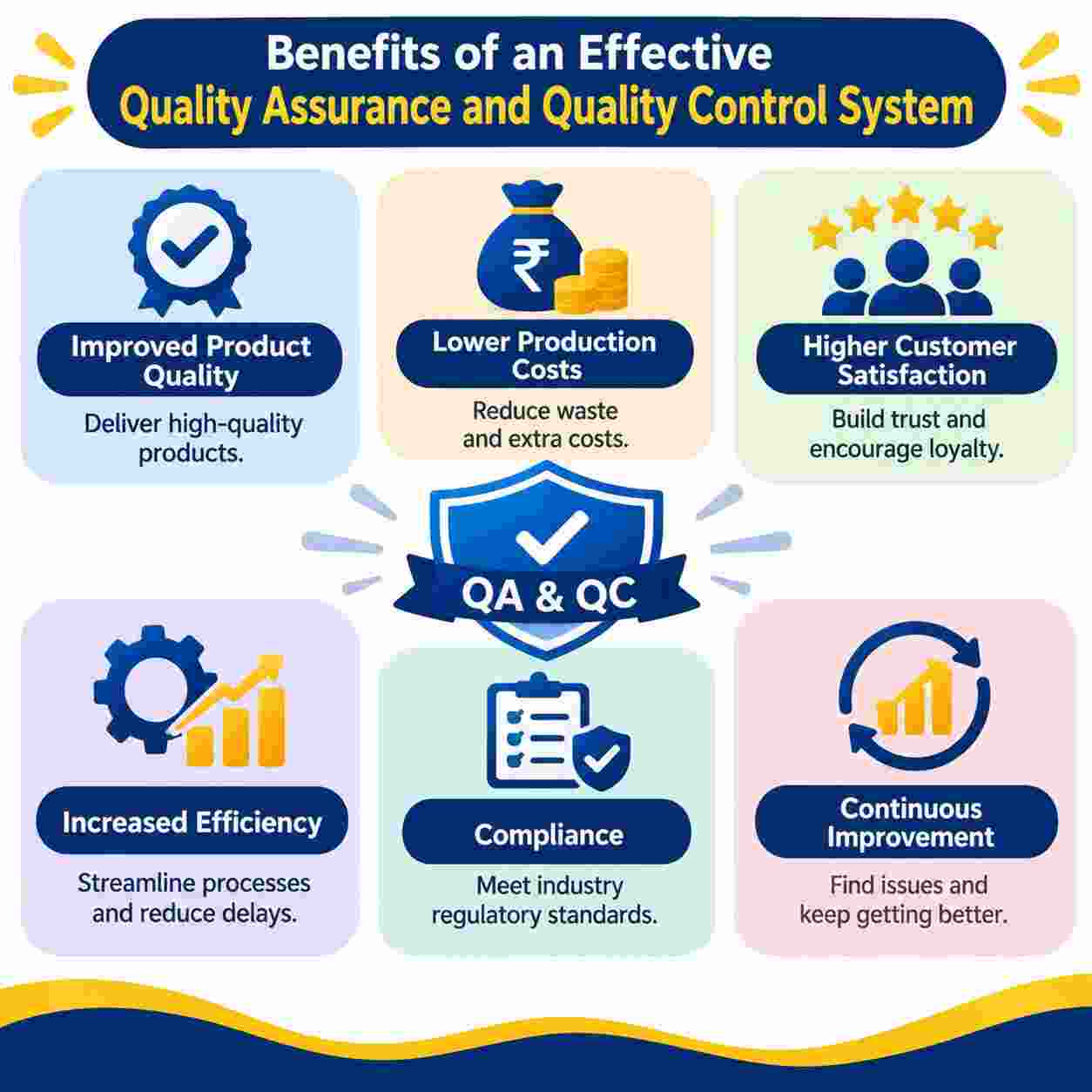
Benefits of an Effective Quality Assurance and Quality Control System

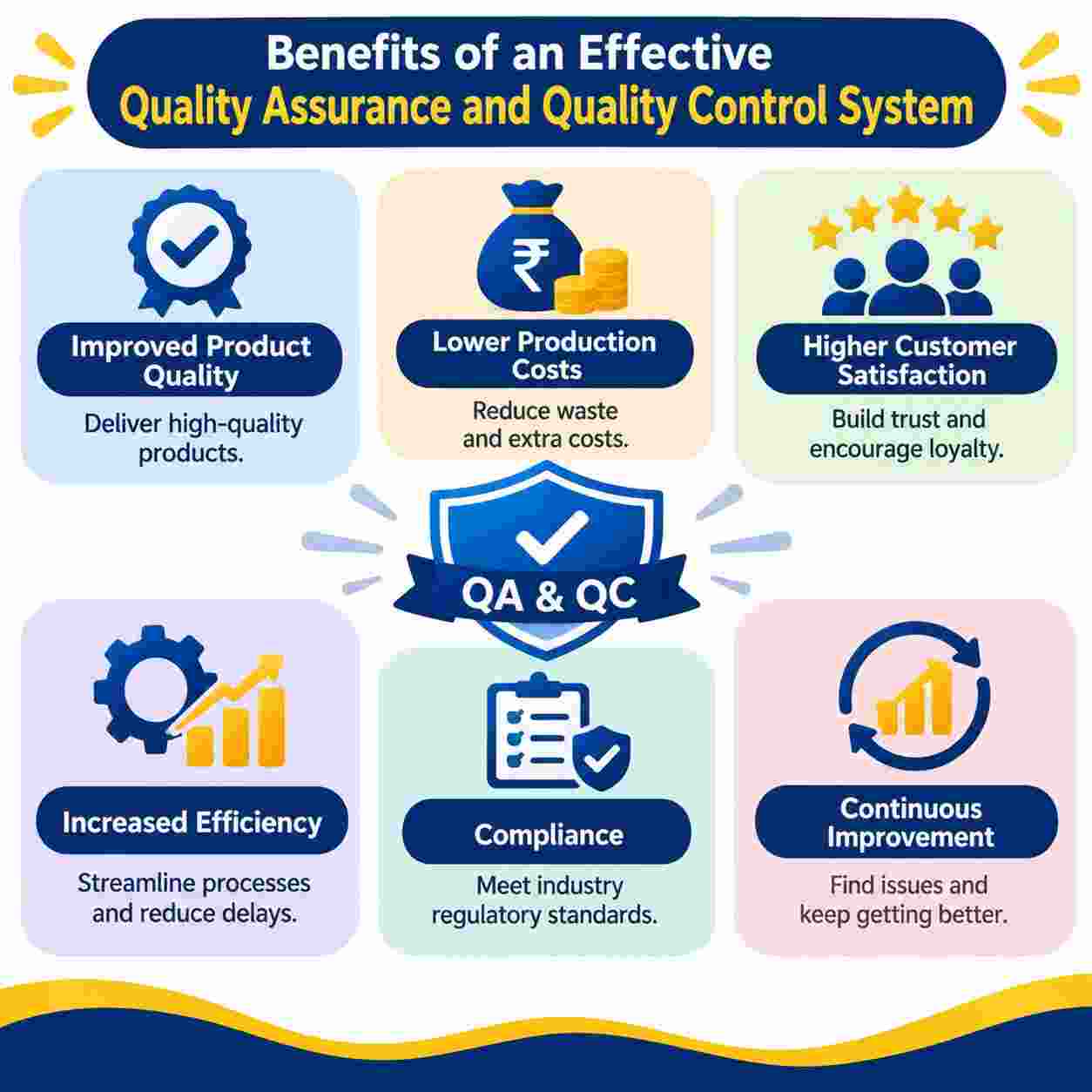
Effective QA and QC systems ensure businesses can manage product quality, improve their production process and meet the needs of their customers. With defect prevention and product inspection, organizations can avoid errors and minimize costs while maintaining the required levels of product quality. There are some of the main advantages: 

  • Improved Product Quality: Frequent quality inspection and improved production process will ensure businesses provide products that match the set quality standards. 

  • Lower Production Costs: Process problems detection and reduction of the number of defective products will reduce material losses and other additional costs. 

  • Higher Customer Satisfaction: Good product quality will help businesses to meet customer expectations and build the trust necessary for future sales. 

  • Increased Efficiency: Improved standardization and inspections will help businesses detect problems in the production process, eliminate any delays, and improve efficiency. 

  • Compliance: Quality procedures and inspection requirements will ensure businesses meet all the regulatory requirements of the industry. 

  • Continuous Improvement: Information collected through the QA and QC process will help businesses to find the problems and improve the process continuously. 

Build Your Business Management Skills with IIM Bangalore

Quality Assurance and Quality Control help businesses maintain product standards, prevent defects, and improve operational efficiency. The General Management for young Leaders (ELP) from IIM Bangalore can help professionals develop management knowledge and understand important aspects of business operations and quality management.

Key Learning Areas:

  • Quality Management and Process Improvement

  • Business Operations and Efficiency

  • Risk Identification and Problem-Solving

  • Performance Monitoring and Decision-Making

Explore the General Management for young Leaders (ELP) from IIM Bangalore to strengthen your management knowledge and business decision-making skills.

What Are the Common Challenges in Quality Assurance and Quality Control? 

Introducing QA and QC processes can be rather challenging for companies since they need to provide consistent standards at all production stages. In addition to resource constraints and employee mistakes, evolving quality needs can impact the effectiveness of such processes. The following list contains some examples of possible challenges: 

  • High Implementation Cost: Implementing quality management systems, investing in testing equipment and employees' training can result in increased costs. 

  • Insufficient Number of Qualified Workers: The lack of qualified workers will complicate identifying quality problems, conducting inspections, and maintaining necessary procedures. 

  • Human Mistakes: Possible mistakes of workers during production, inspection, and documentation can influence the quality of products and lead to inconsistencies. 

  • Change Resistance: Employees can have difficulties in implementing new quality standards, using advanced technologies and following production procedures. 

  • Unconsistent Quality Standards: It might be rather complicated to maintain the same quality standards in different departments, suppliers and production units. 

  • Time-Consuming Processes: Regular audits, inspections, testing and documenting can interfere with the production process. 

  • Poor Coordination: Poor communication between production, QA and QC workers can cause delays in defect reports and fixing them. 

How Should Businesses Select the Correct Quality Management Strategy? 

Selection of the correct quality management strategy will be dependent upon the goals, production process, demands of the industry, and resources at the disposal of the organization. Businesses need to assess their quality requirements and determine whether they need to concentrate more on prevention or inspection or both of these strategies. The below-mentioned points may guide businesses: 

1. Establish Objectives for Business Quality Management: Figure out what objectives the company wants to fulfill, whether it is the minimization of production defects, quality of products, or consumer expectations. 

2. Review Existing Practices and Processes: Look at existing production flows, inspecting practices, and quality management measures to find the weak spots and areas where improvement is needed. 

3. Analyze Industry Requirements: Keep in mind industry-specific quality standards and consumer expectations when choosing a quality management approach. 

4. Determine Available Resources: Figure out the budget, technologies, equipment, and skills necessary for quality management practice implementation and maintenance. 

5. Choose an Appropriate Methodology: Choose between Quality Assurance (QA), which is responsible for improving processes and preventing defects, Quality Control (QC), which is aimed at inspecting products and detecting defects, and using both. 

6. Measure Performance: Monitor quality indicators, inspect inspection reports, gather feedback, and improve quality management processes regularly. 

Conclusion 

Quality Assurance (QA) and Quality Control (QC) are fundamental to keeping the quality of the product intact and running the business operations in an effective manner. In the sense that quality assurance prevents defects using better processes while the quality control detects defects using inspections and testing. Utilizing both the methods in tandem allows businesses to eliminate errors, manage production costs, satisfy customers, and retain consistency in their products.

Tripti Diwakar

Tripti Diwakar

Digital Marketing & Content Specialist

12+ of articles published

Associated with upGrad since 09 Feb 2026


Domain:

UpGrad

Current role in the industry :

Associate - Content

Education Qualification :

B.com Hons

About

Tripti Diwakar is a digital marketing and content professional with close to one year of experience in digital marketing, content writing, and content development. Currently working as an Associate at upGrad, she focuses on creating and refining content that strengthens brand visibility, connects with audiences, and supports digital growth. With an academic background in commerce and a keen interest in marketing, Tripti brings together business knowledge and creative thinking to develop meaningful, engaging, and audience-centric content. Her areas of interest include digital marketing, content marketing, social media, SEO, and effective digital communication.

Follow me on :

No blogs published yet.

Latest Blogs

Hypothesis Testing
Nov 18th, 2026

Hypothesis Testing

Hypothesis testing is a statistical method used to evaluate assumptions and claims using sample data.

Frequently Asked Questions

General