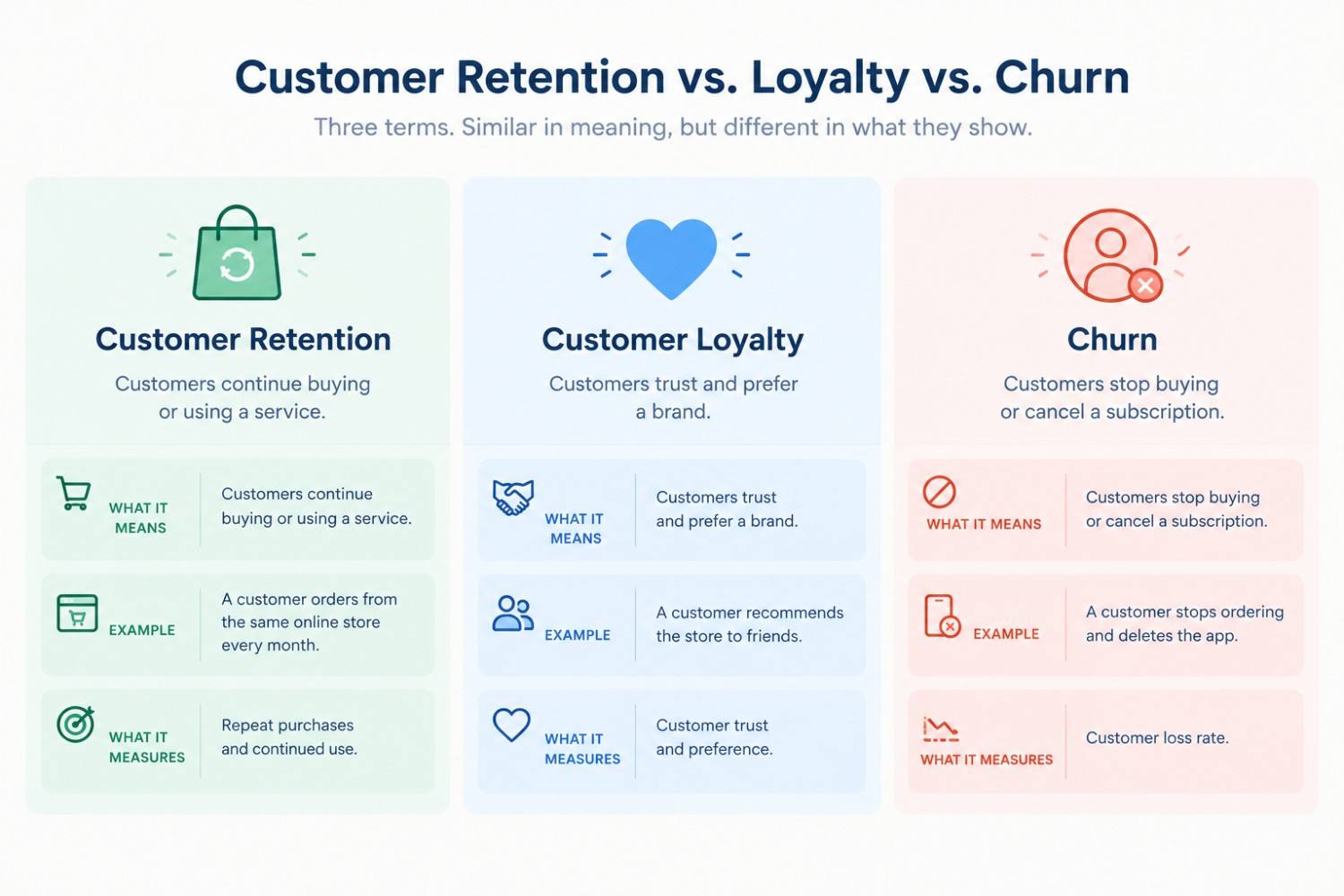
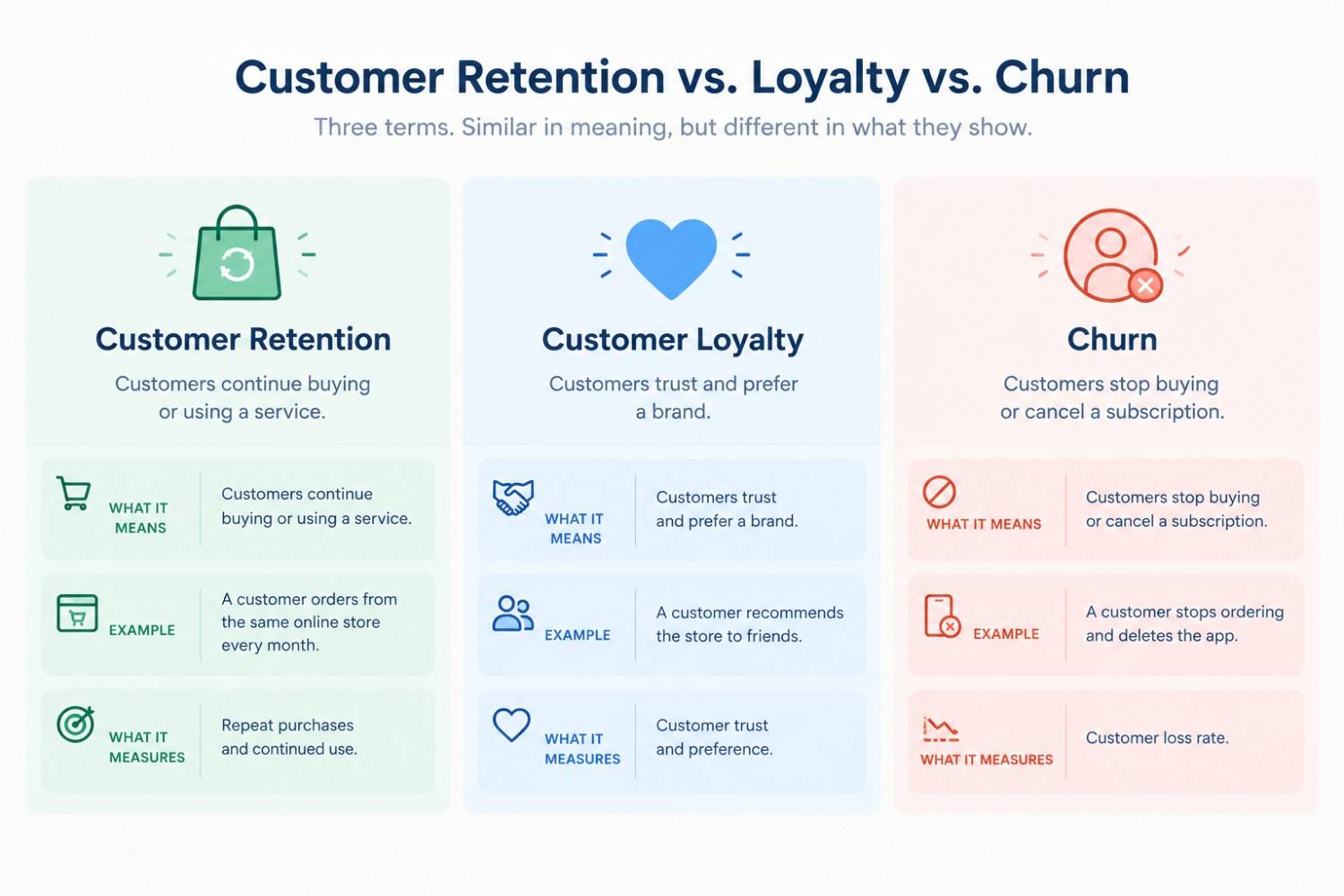
So, what is the meaning of customer retention in one line? It is customers continuing to buy from you. Loyalty is the feeling behind it, and churn is what happens when it stops.
10 Customer Retention Strategies That Work
There is no one-size-fits-all solution that will work for all businesses. The best approach depends on what your customers require, your own business processes, and the reasons customers are leaving. Assuming that you want to know how to retain your customers, here are ten tactics that you could adopt.
Make a great first impression: On-boarding and a good customer experience ensure customers start off on the right foot. These are tactics 1 and 2.
Be always available: Helpdesk support, outbound engagement and soliciting customer feedback maintain a high level of customer trust and demonstrate your willingness to engage. These are tactics 3, 4 and 5.
Add value: Customer loyalty programs, personalization and education provide customers with a compelling reason to continue doing business with you. These are tactics 6, 7 and 9.
Create engagement: Building communities and referral marketing turns happy customers into brand advocates. This is tactic 8.
Reactivate: Win-back campaigns can reach out to dormant customers when appropriate. This is tactic 10.
1. Improve Customer Onboarding
Onboarding is the way you support the process of initial customer engagement. How to ensure customer retention in the first week? Start by making the process clear and easy for the new client. A self-assured new customer is less prone to drifting off.
Welcome the new customer with a welcome letter that outlines the next steps.
Provide them with simple instructions on setting up the subscription or placing an order.
Watch for any indicators such as first-use completion rate or drop-offs.
A learning application may send a quick "get started" email or WhatsApp message and measure the percentage of completed first-time use lessons.
2. Make the Customer Experience Frictionless
Any factors that make the purchase and usage process more difficult are referred to as frictions. Overcoming frictions is the key to retaining your clients without additional efforts. Analyze each step of the process and ask yourself where people have problems.
Before purchasing: confusing pricing or slow loading pages.
While purchasing: complicated checkout or repeated filling out of forms.
After purchasing: difficulties with returns or cancellation process.
Analyze the points above with the help of analytics and customer reviews. Do not ever conceal cancellation or return options. Be open and honest.
3. Provide Fast, Personalised Customer Support
The good support addresses the problem, not just addresses the question quickly. An accurate response which will fully resolve the issue helps to maintain trust better than a quick but incorrect one. Use the media your clients like, such as WhatsApp, email, telephone, or live chat.
Answer in a polite way, addressing the client and his order.
Answer accurately and ensure the problem is solved.
Provide 24/7 service only if you can really offer it.
4. Make Contacts Proactively
Making contacts proactively means reaching out to the client before he asks about anything. The messages which might be useful would include information on delivery, renewal, maintenance, and replenishment. Always respect consent and communication preferences.
E-commerce: Reminder when the purchased product becomes scarce.
Subscriptions: Renewal information before billing.
Services: Reminder of the need for maintenance after providing a service.
Keep messages relevant and timely, and avoid sending too many.
5. Act on Customer Feedback
This is just the beginning. Customers will keep on returning if they can see tangible results following from their feedback. Collect feedback from surveys, reviews, support conversations, and post-purchase messages and then use this simple cycle:
Collect feedback from various sources.
Categorize it by theme.
Prioritize the most frequent problems.
Fix what you can.
Check in with your customers and let them know what was fixed.
6. Create Loyalty Programs That Deliver Real Value
Loyalty programs are designed to reward your returning customers. Rewards may be presented in form of points, memberships, discount, package deals, or any service advantages. Consider the value of the reward from the customer perspective: is it clear and valuable for them?
Be specific in terms and conditions.
Provide rewards that customers really want.
Just remember that rewards do not mean the guaranteed return.
Sometimes better services matter more than rewards. If the reasons for leaving are recurring deliveries – solve this issue first.
7. Personalise the Customer Experience
Personalisation is tailoring experiences through information you have about your customer. This includes things like preferences, purchase history, and stated interests. Personalisation is not merely inserting a customer’s name into an email or post.
Recommend products based on purchase history.
Share content based on interests.
Be transparent regarding your data usage and adhere to appropriate regulations.
Do not engage in intrusive or sensitive personalisation. While helpful personalisation can foster trust, overdoing it can turn customers off.
8. Build a Customer Community and Encourage Referrals
Communities are places where your customers meet, exchange knowledge and collaborate with each other. Referrals are a tool used to motivate satisfied customers to refer you. These strategies rely on providing ongoing value, which requires consistent work.
Hold valuable meetings or classes for customers, either in person or via an online platform.
Make them optional for participation.
Be transparent about referral rewards and avoid false testimonials.
For example, a company selling exercise equipment can organize a free monthly workout session for customers.
9. Educate Customers to Help Them Get More Value
Customers will stick around if they get results. Educating them will help them make the most of your product or service. Use real questions and support issues to generate your content.
Guides & FAQs: Respond to frequently asked questions clearly.
Short videos & tutorials: Show them the way visually.
Webinars & troubleshooting advice: Let them fix their own problems.
Make sure all the guidance is up to date, accurate and easily accessible.
10. Win Back Inactive Customers
Win-backs are attempts to connect to customers who have stopped purchasing your product or service. How do you win back customers through customer retention strategy who have already been lost? First define the word “lapse” depending on your buying cycle. The buyer who purchases monthly would be lapsed after two missed months but not the one who buys yearly.
Identify your lapsed customers.
Segment them according to their possible reason.
Send a test message or offer.
See how many of them reconnect.
Stop if there is no response, and respect opt-outs.
Why Customer Retention Matters?
What does customer retention mean for a business? It means a stable flow of revenue, better relations and reduced efforts to always search for new clients. Exact figures vary from company to company, but here is the value of customer retention explained in plain words.
Recurring income: Clients who come back guarantee a steady income stream. The growth of a business can be unpredictable, however.
Better relations: Regular customers are familiar with your products or services. They tend to be easier to deal with and quicker to give feedback on them.
Cost of replacement: Acquiring new clients involves marketing efforts, some kind of incentives and investments of time. Customer retention helps cut down on costs involved in replacement of lost customers.
Knowledge base: Long-term clients reveal your strengths and weaknesses and help to enhance your offerings.
Monetary significance: What is the monetary significance of customer retention for your business? This is about a larger part of your past efforts being beneficial to you instead of the need to start from scratch every month.
Why Customers Leave: Identify and Fix Retention Gaps
Churn is a symptom, not the root cause. Customers churn due to unmet expectations, poor customer service, wrong pricing, product fit, inconvenience or need changes. It is better to investigate rather than make assumptions and cross-check each reason against the facts.
Unmet expectations: The offer did not live up to the promises. You should look for the words "not as advertised" among support queries and in customer feedback.
Poor customer service: Long response times and unsolved issues lead to loss of trust. Response time, recurring inquiries and issues resolution percentage can help to detect this issue.
Wrong pricing or value: The customer finds the offer overpriced for its value. You can find out about that through exit surveys and correlate it with the use frequency.
Inconvenience or product fit: The offer does not correspond to customers' needs and preferences. The drop-offs during sign-ups and product returns are a hint of this issue.
Change of needs: The situation of the customer changes. Analyze the patterns depending on the customer segment or life-stage to define the appropriate action.
Analyse Support Tickets, Exit Surveys and Repeat-Purchase Gaps
To find where customers drop off, review different data sources together. Survey answers can be biased, because customers may not share their real reasons. Compare them with behaviour, such as what people actually did before leaving.
Support tickets: Reveal repeated complaints and confusing steps.
Cancellation reasons: Show what customers say when they leave.
Survey responses: Add detail on feelings and expectations.
Time between purchases: Shows when a customer is “late” compared with their normal pattern.
Customer cohorts: Compare groups, such as people who joined in the same month, to spot where drop-off starts.
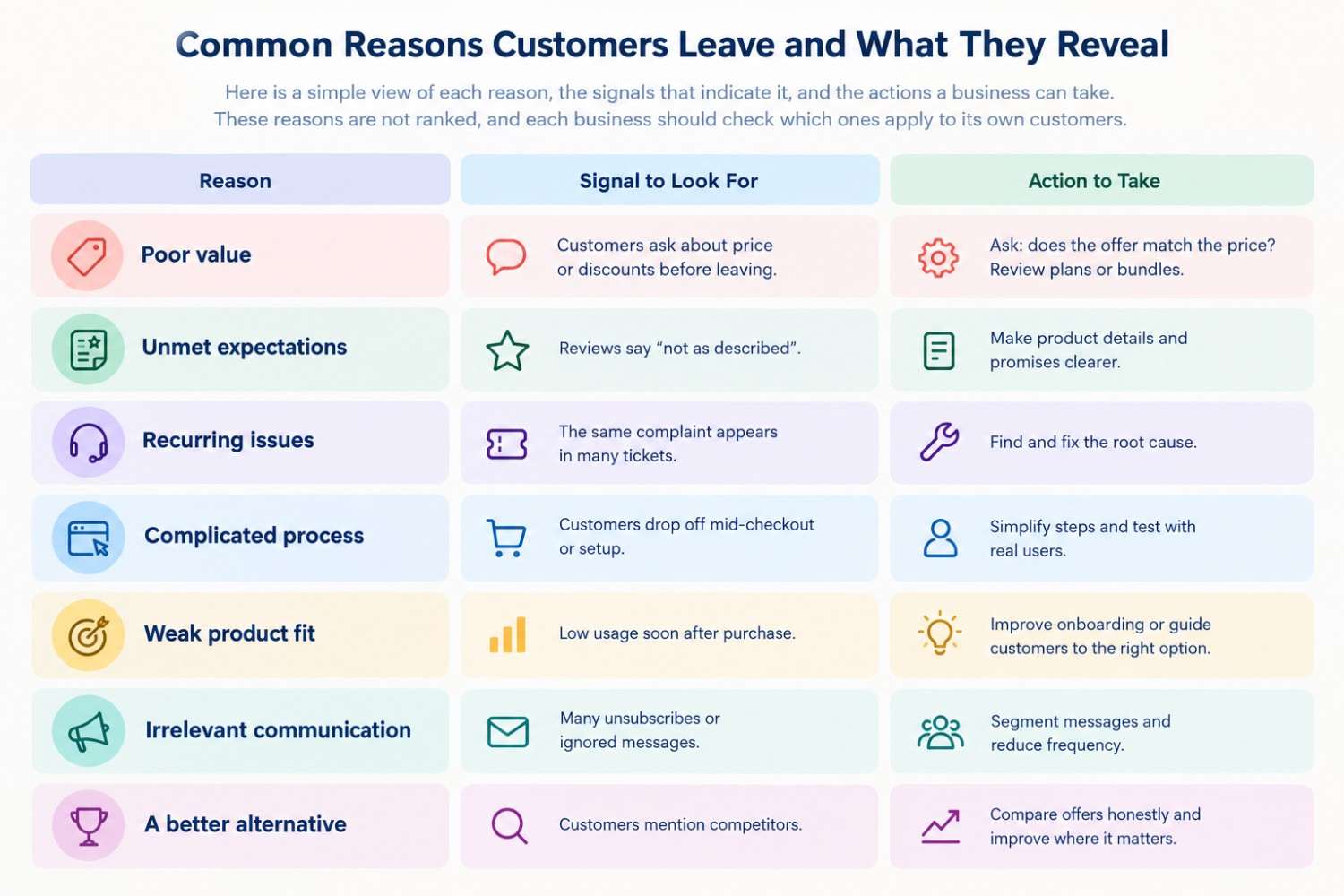
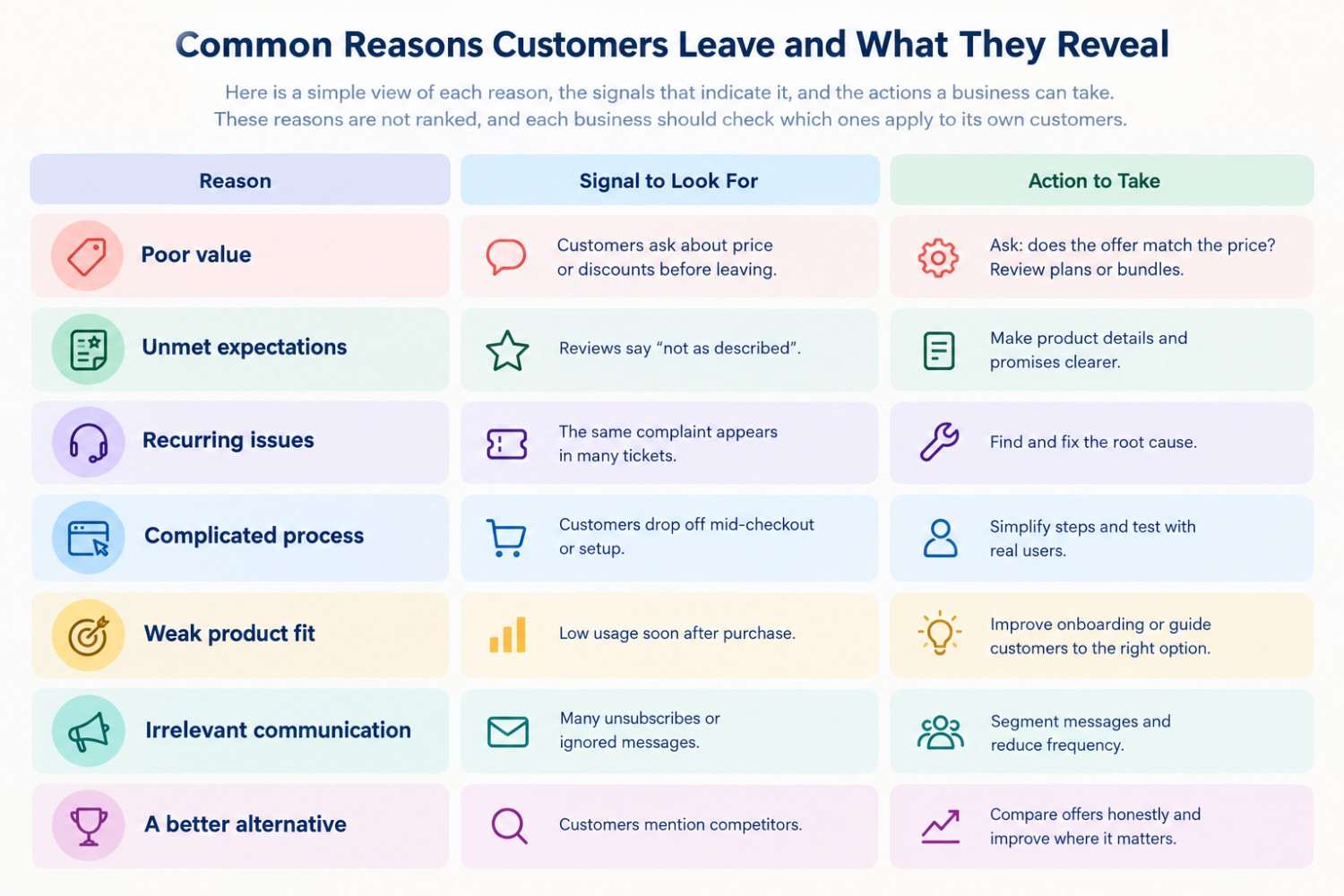
Common Reasons Customers Leave and What They Reveal
Here is a simple view of each reason, the signals that indicate it, and the actions a business can take. These reasons are not ranked, and each business should check which ones apply to its own customers.