Every business owner wants to know one thing early on: how much do I need to sell before I stop losing money?
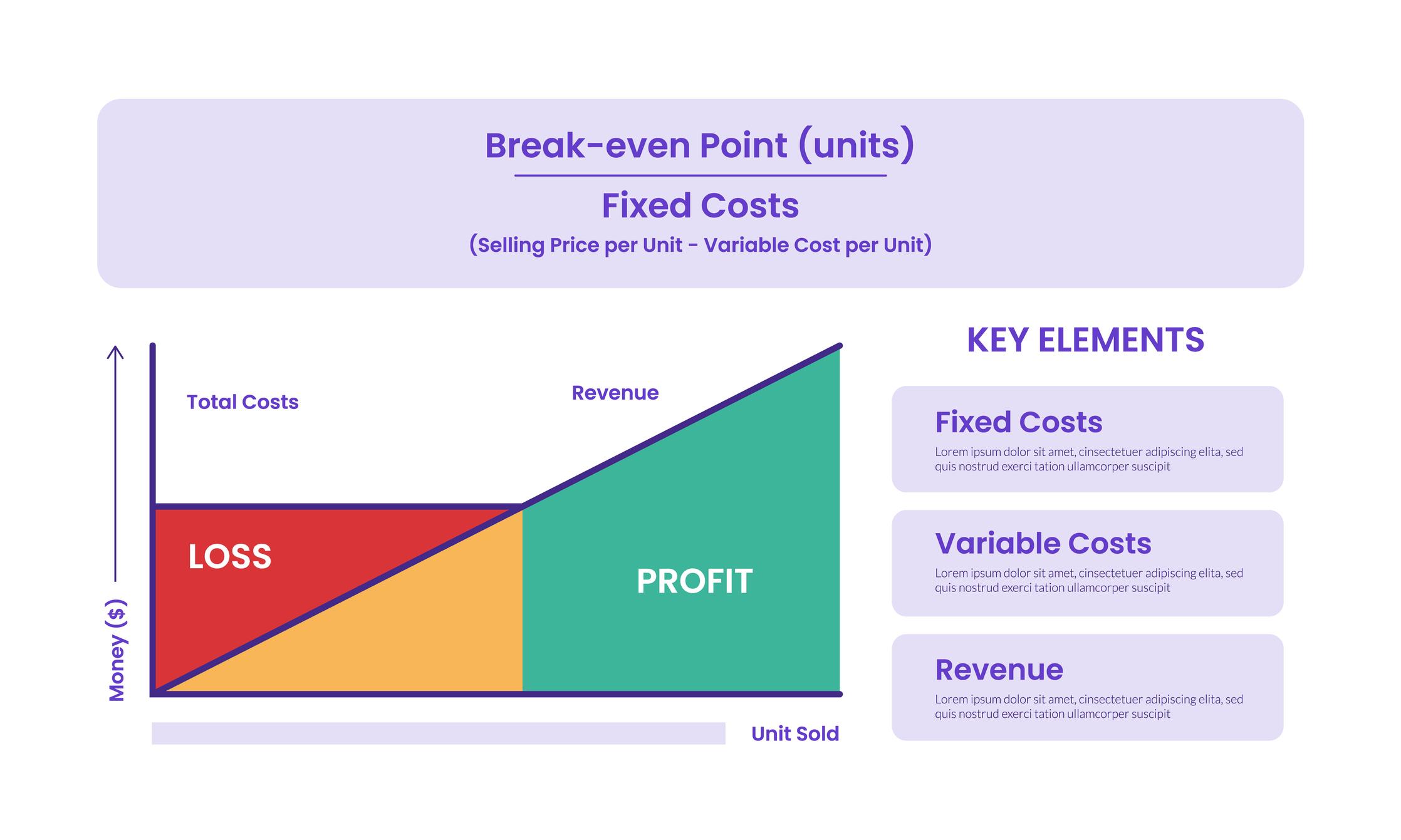
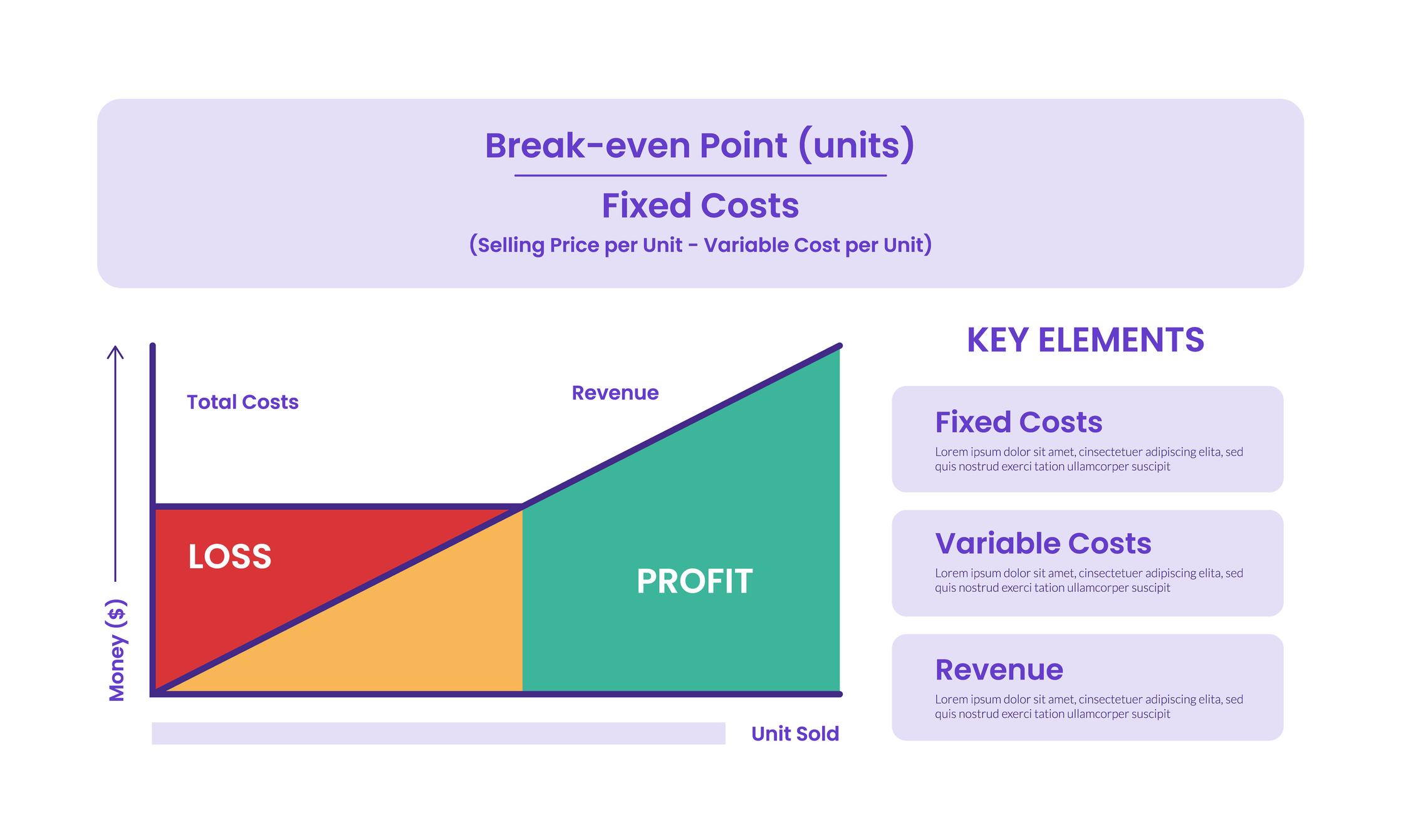
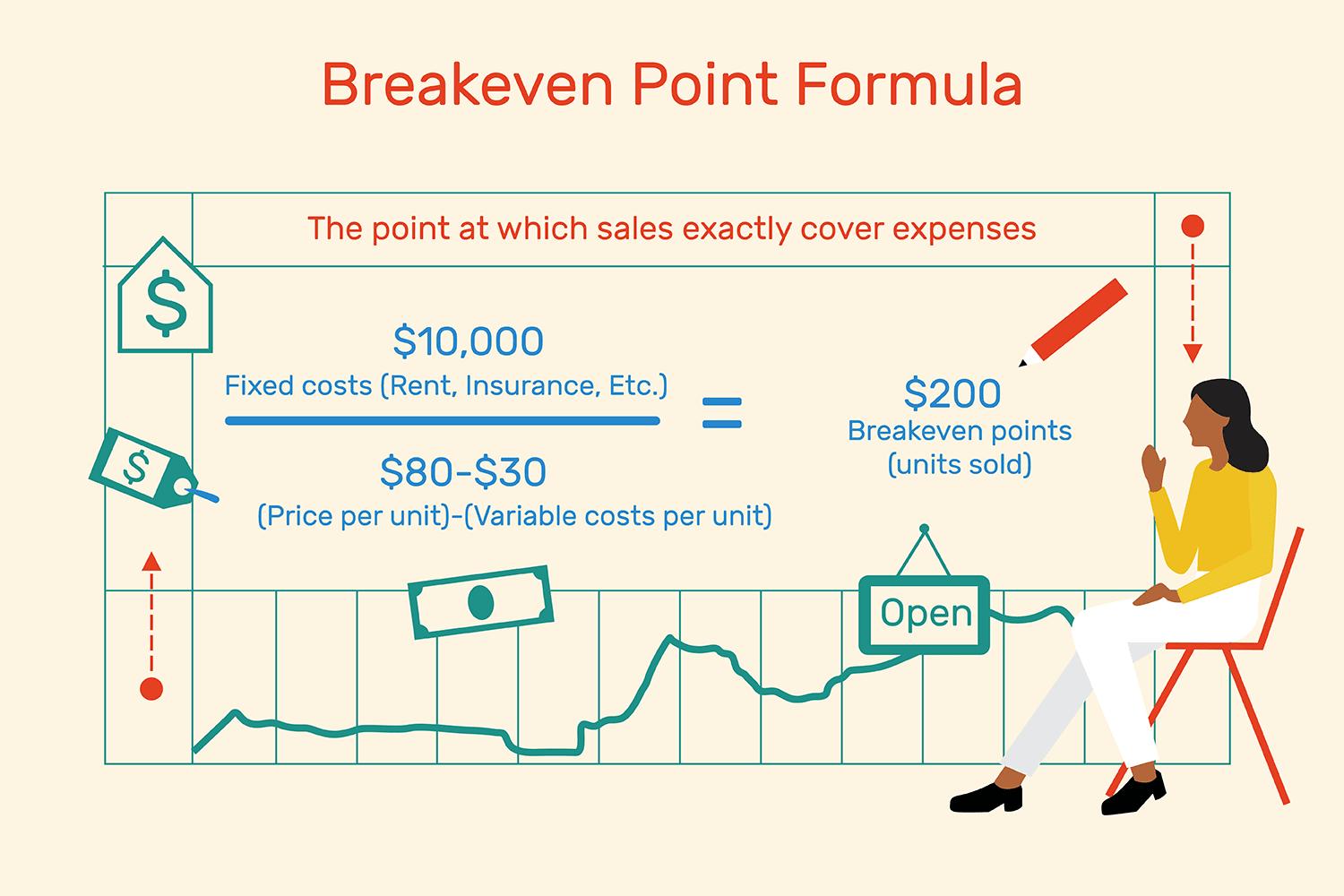
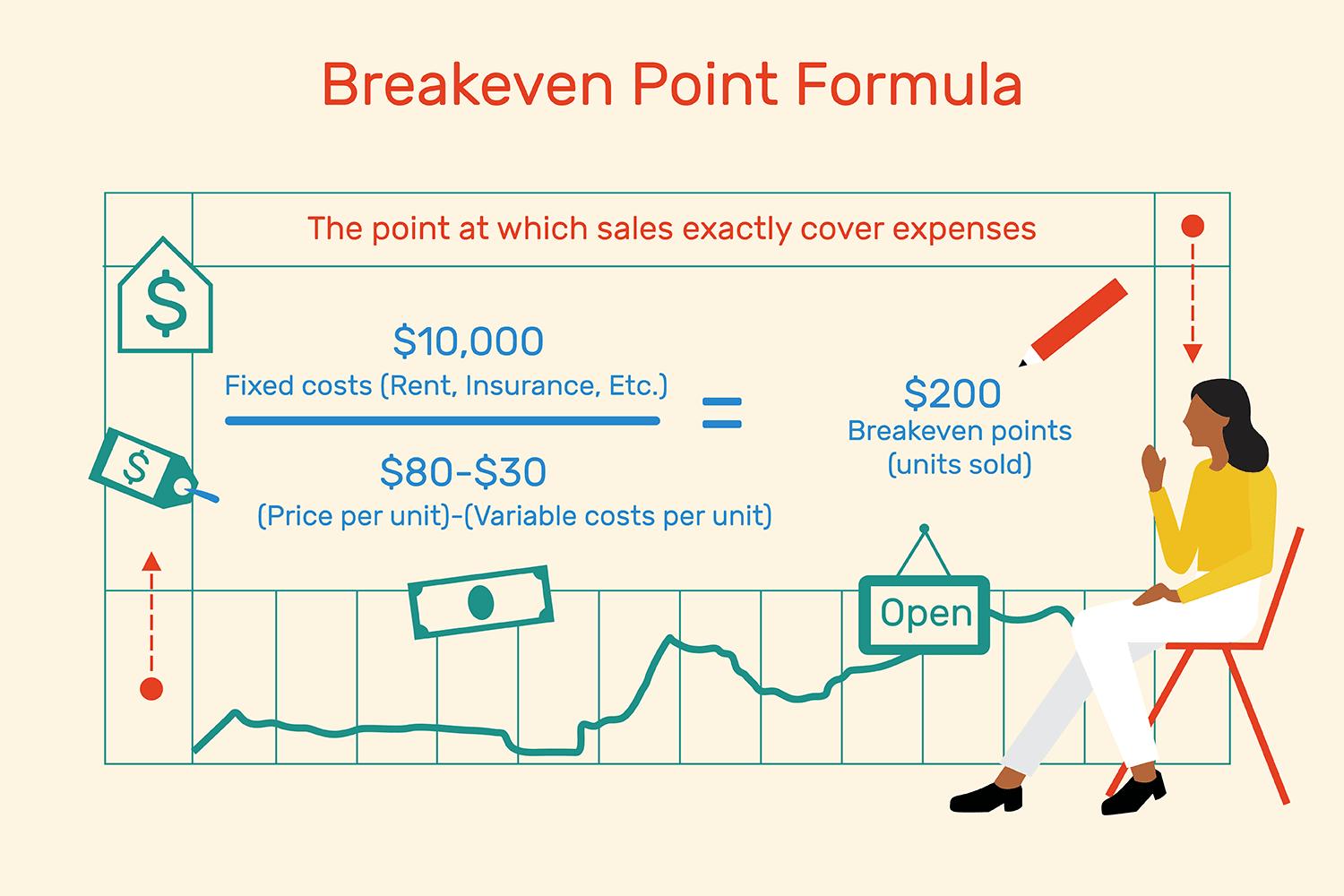
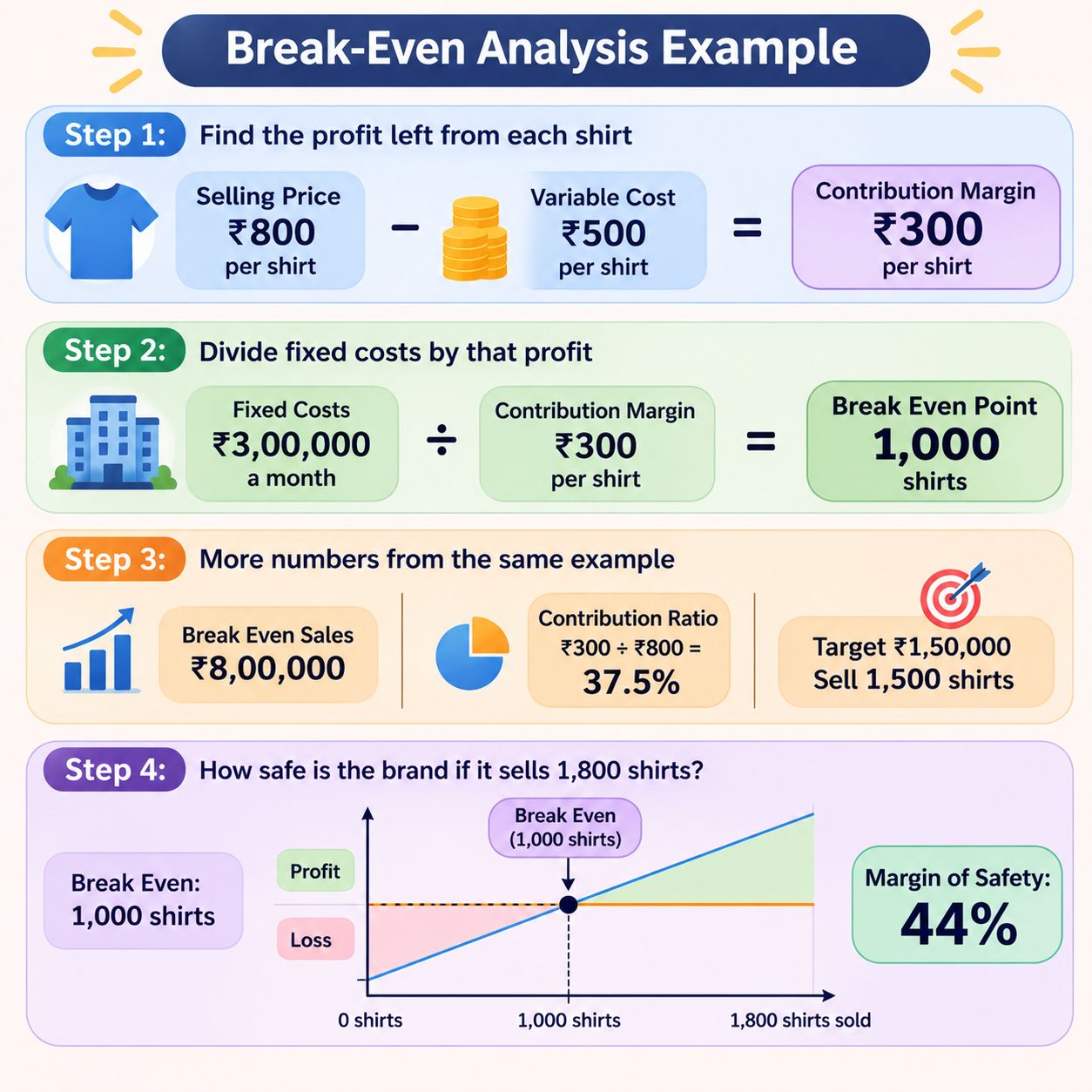
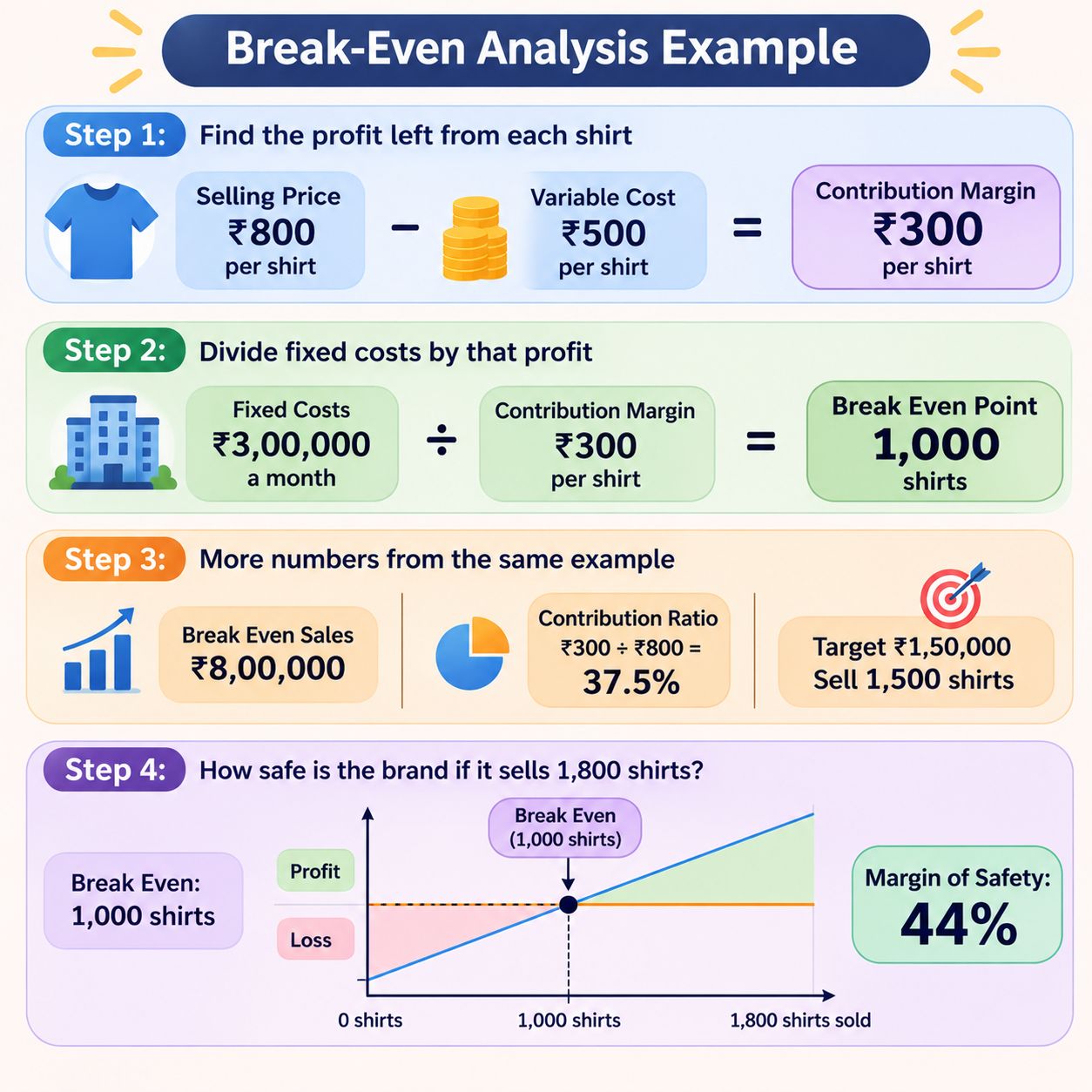
Break even analysis helps you find the sales a business needs to cover all its costs. You calculate it with a simple formula: Fixed costs / (selling price per unit minus variable cost per unit).
At the break even point, a business’s total revenue is equal to its total costs.
This means the business makes zero profit and zero loss. Every sale after this point adds to profit.
It uses five parts: fixed costs, variable costs, revenue, contribution margin, and the break even point. You can find the result in units or in sales value and also use it to plan a target profit, check your margin of safety, and lower your break even point.
In this blog, you will learn the formula in plain words, follow a simple calculation, and work through three examples in rupees. By the end, you will be able to find your own break even point with just a pen and a calculator.
What Is Break Even Analysis?
Break even analysis helps to identify the quantity a business needs to sell in order to make enough money to pay for all its costs.
The purpose of break even analysis is to assist the business in answering such questions as
What quantity should we sell this month?
What price can we safely charge?
Should we launch this new product?
Lenders and investors also require it prior to financing the firm, since it shows how quickly the firm can break even. It is used by various persons for different purposes:
Business owners use it to fix prices and sales goals.
Entrepreneurs use it to understand how many units should be sold in order to survive.
Finance students and analysts use it to analyze costs and profits.
Traders use the same concept to determine the price at which the trade breaks even.
Key Components of Break Even Analysis
The factors involved in the break-even analysis include fixed costs, variable costs, income, contribution margin, and the break-even point. Income refers to money obtained through sales, while the break-even point refers to sales at which income equals the total cost. The other three require further discussion.