
IIMBx - Digital Learning Foundation

Business Model Canvas: 9 Building Blocks, Template and Example

By Neeti Bengani

Updated on Oct 28, 2026

Share:

Quick Overview:

  • The Business Model Canvas (BMC) is a one-page business planning tool developed by Alexander Osterwalder. It shows how a company creates value for its customers, delivers its products or services, and earns revenue.

  • Its nine building blocks cover customer segments, value propositions, channels, customer relationships, revenue streams, key resources, key activities, key partnerships, and cost structure.

  • The Business Model Canvas helps startups plan their business ideas and existing businesses improve their operations, manage costs, and identify opportunities to increase revenue.

This guide covers what a Business Model Canvas is, its nine building blocks, how to fill in a Business Model Canvas template, and a practical example to help you understand how businesses use it to plan and improve their operations.

What Is a Business Model Canvas?

The Business Model Canva is a one page chart that helps a business to understand how the business creates value, delivers value, and captures value. Its aim is to help a business person in planning his or her business, identify his target customers, what kind of products or services he will provide, how he will make profits and how many costs will incur. It incorporates all these elements of business planning on one sheet of paper.

For an entrepreneur or for startups, the Business Model Canvas helps him or her to design a startup idea while for a successful business it helps to enhance its existing business model. The Business Model Canvas comprises nine blocks.

What Are the 9 Building Blocks of a Business Model Canvas?

The Business Model Canvas consists of nine building blocks that help to understand the process of how businesses operate. These blocks include information on the customers, product/service being provided, how you make money and how you spend it and everything else that is involved. Below we will review each of these blocks through examples.

1. Customer Segments

A customer segment refers to the group of individuals that the company seeks to sell its product or services to. Once a business identifies who its customers are, it becomes easier for them to identify their needs and provide products which they can purchase., For example, a clothing brand may target college students, working professionals, and families.

2. Value Propositions

Value propositions describe what a company provides to their customers and why they should prefer it against others. They may offer low cost, high quality, convenience, or some unique thing that solves the customer’s problems. For example, a food delivery app may attract customers by offering quick delivery, plenty of restaurant options, and easy online payments.

3. Channels

Channels are used by a business to access its market and deliver its offerings. The channels facilitate access to a product, purchasing of a product, and any subsequent customer service. For example, a clothing brand may sell its products through a website, a mobile app, and physical stores.

4. Customer Relationships

Customer relations refer to the way in which a business handles its customers and maintains contact with them. This can involve customer service, customer care, loyalty rewards, and even self-service. For example, a coffee shop may offer a loyalty card that gives customers a free drink after several purchases.

5. Revenue Streams

The revenue streams refer to how a business generates its income. The business may generate income through selling of goods, subscriptions, provision of services or commission. For example, a streaming platform may earn money through monthly subscriptions, while an online marketplace may charge sellers a commission on each sale.

6. Key Resources

Key Resources are those assets that are required by the company for its smooth functioning and provision of goods/services. These can be people, machinery, capital, technology, facilities, or brand names.

For example, an e-commerce business needs a website, products, inventory, employees, and a reliable delivery system to serve its customers.

7. Key Activities

The key activities refer to the core activities which should be performed by an enterprise in order for it to function. They are determined by the type of business and may include production, marketing, selling, and after-sales services. For example, a clothing manufacturer needs to design clothes, purchase materials, produce garments, and check product quality.

8. Key Partnerships

The important partners are the firms or suppliers that help the organization in conducting business activities effectively. Good partners can help the business achieve its goals by saving time, money, and reaching more customers. For example, an online clothing store may work with manufacturers, payment providers, and delivery companies to sell and deliver its products.  

9. Cost Structure

Cost structure includes all those costs that an organization has to bear for carrying out their business activities. The cost structure may consist of various costs such as rental cost, wages paid to employees, cost of raw material, marketing costs, and transportation costs. For example, a restaurant needs to pay for ingredients, staff salaries, rent, electricity, kitchen equipment, and delivery services.
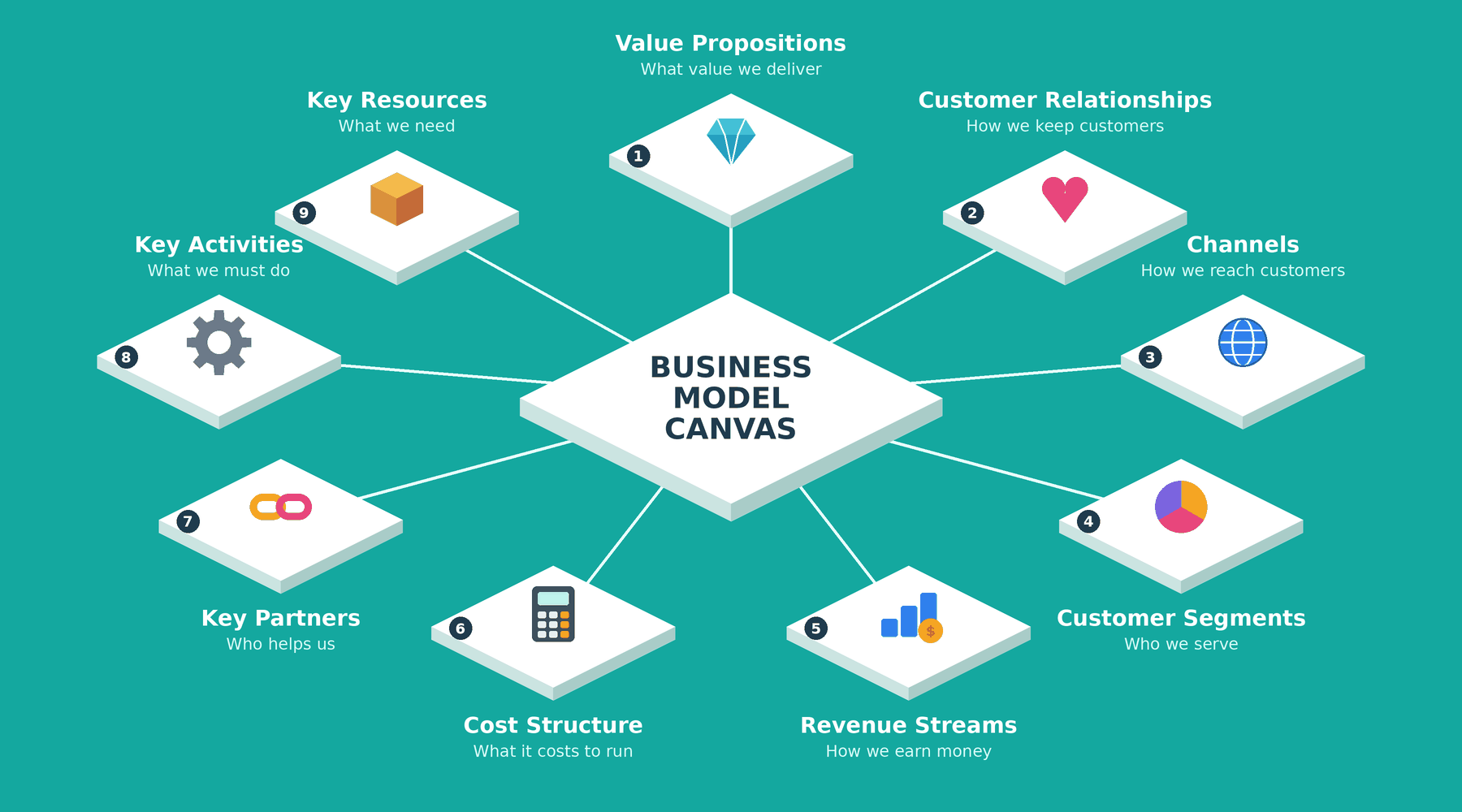
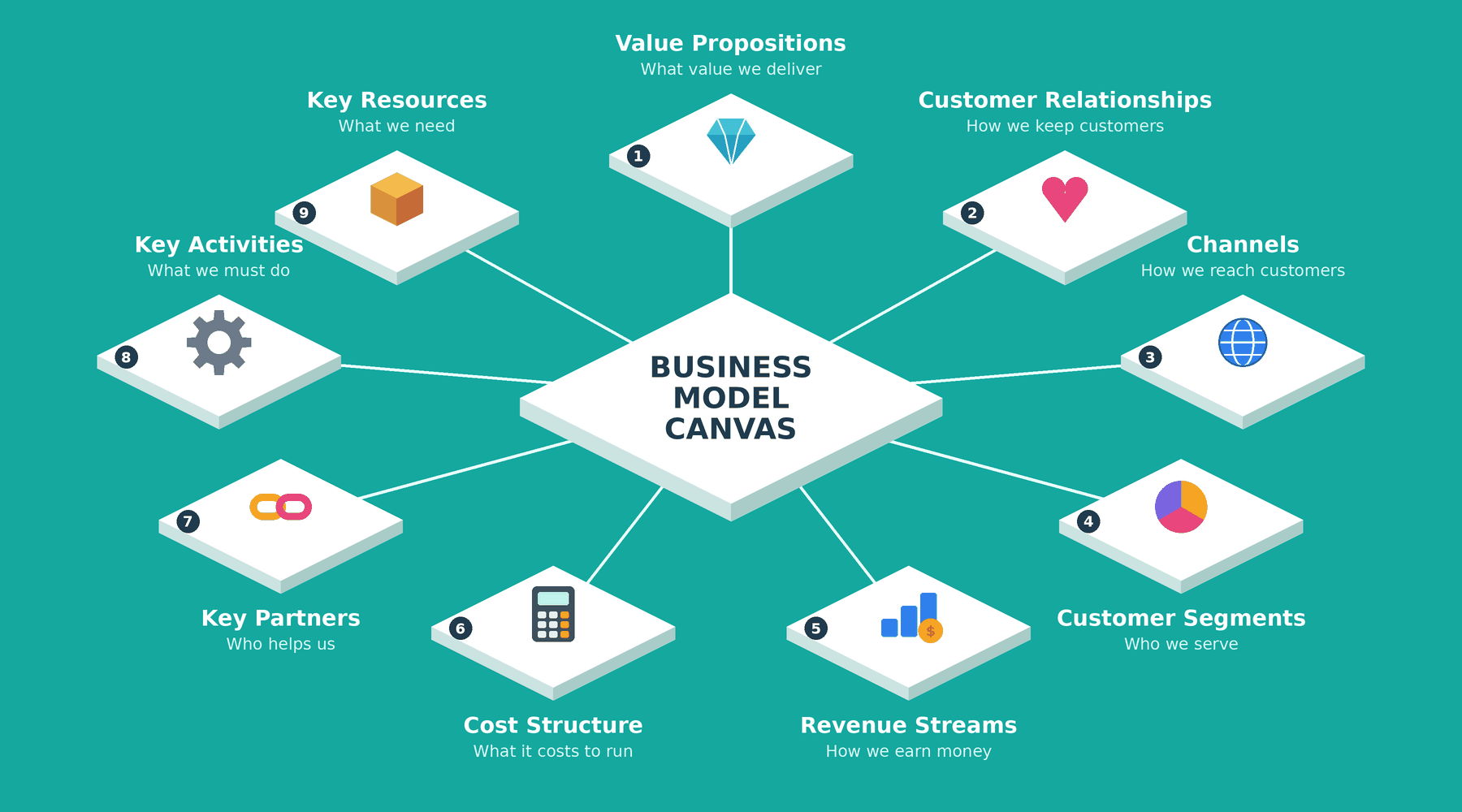
Infographic on Business Model Canvas: 9 building blocks

Business Model Canvas Template

It is possible to use the Business Model Canvas to come up with a plan for a business model in one page. The canvas uses the nine components of any model in order to find out who your customer is, what you will offer, activities and cost/revenue.

Lets look at the template:

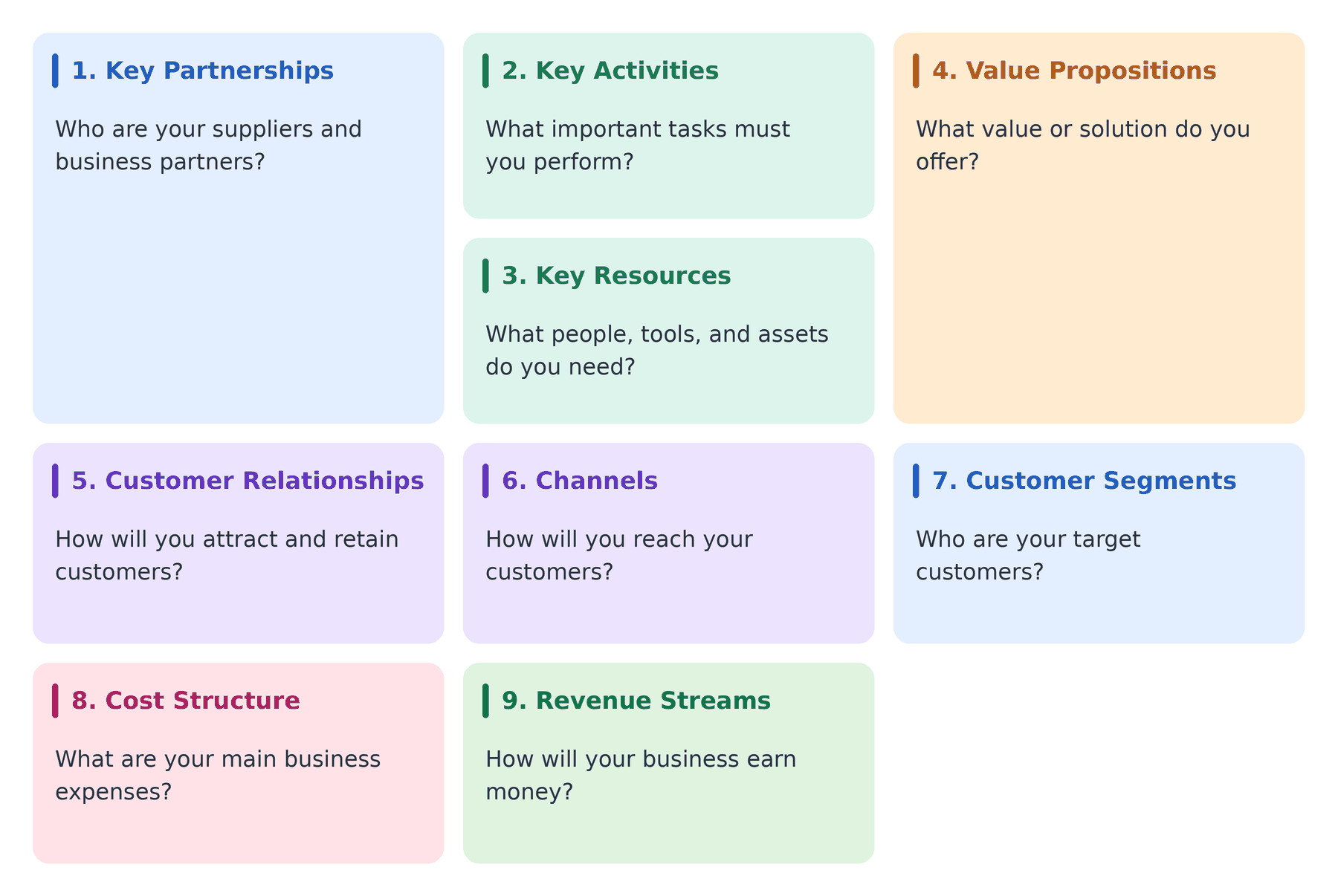
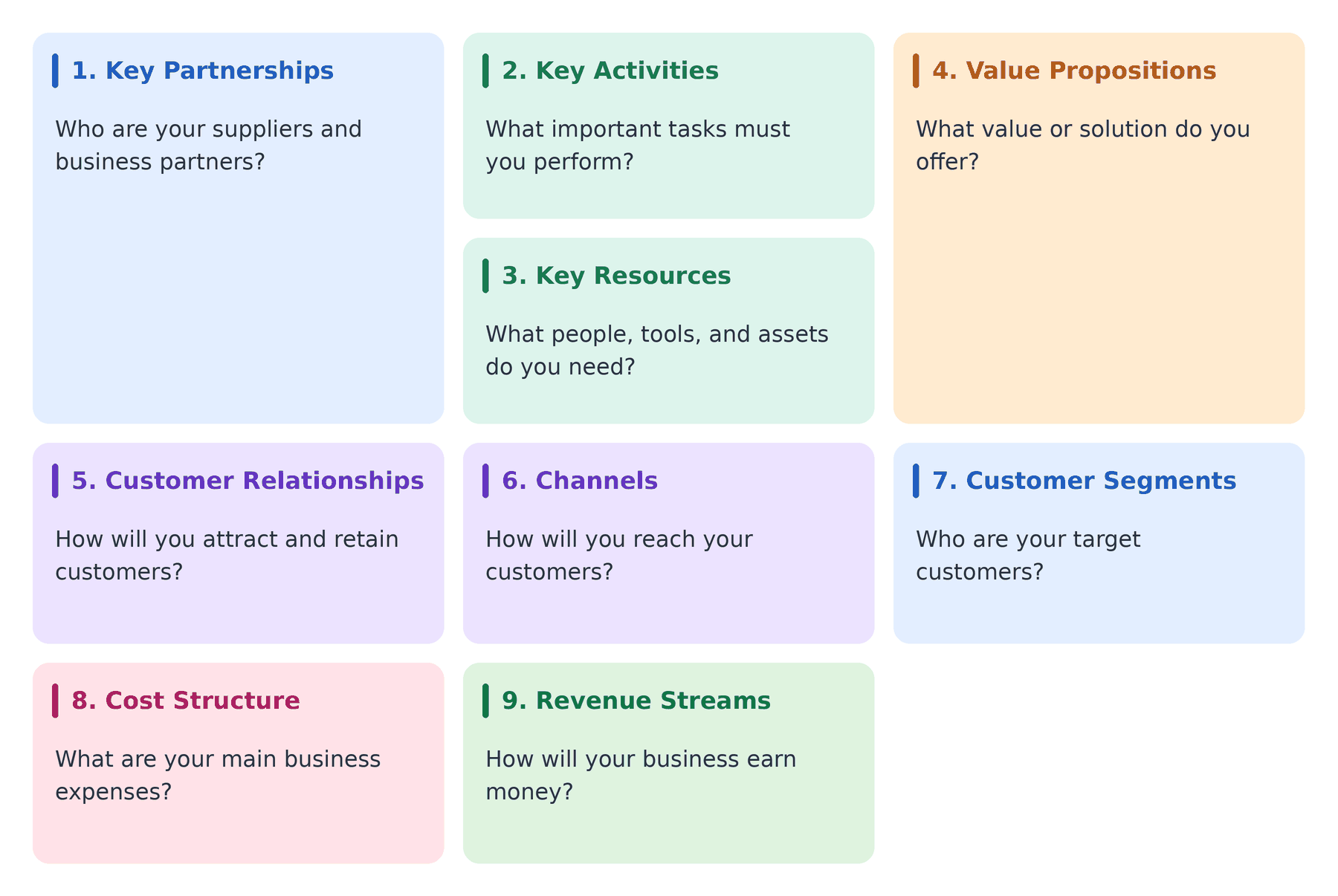
Business Model Canvas Template

Also Read: SWOT Analysis 

How to Fill in a Business Model Canvas

Follow these steps to complete your template and turn your business idea into a practical plan.

  • Definition of Customer Segments: Explain those people or firms who would buy your product or service.

  • Definition of Value Proposition: Clearly state the problem being solved by the product or service along with reasons as to why it’s unique.

  • Definition of Channels: Mention the channels which would help to market, sell and deliver your product/service.

  • Define Customer Relationships: Explain the ways by which you would communicate with your customers, serve them and ensure their coming back.

  • Describe Revenue Streams: Explain about the methods you will use to earn money from your product/services sales.

  • Describe your key resources: Describe the people, equipment and technologies that you require to run your business.

  • Describe your key activities: Describe the key activities that you will perform to produce and distribute your product or service.

  • Describe your key partnerships: Describe the partners including distributors, suppliers etc. who will assist you in running your business.

  • Describe your cost structure: Describe your major cost heads which include salaries, rent, material costs, marketing costs, technology costs etc.

Tip: Begin with shorter points rather than longer paragraphs. Consider all nine blocks altogether to see if your business idea is able to attract customers, provide value, and make enough money to cover its expenses.

To learn how businesses plan their models, create value, and manage key operations, explore the IIM Bangalore General Management for Young Leaders program.

Business Model Canvas Example

Now, let’s learn about Business Model Canvas through a real-life example of an online clothes shop. This is how a business uses all nine elements of the Business Model Canvas to manage their business and generate income.

Example: Online Clothing Store

Building Block

Example

1. Customer Segments

College students, young professionals, and customers looking for affordable, trendy clothing.

2. Value Propositions

Stylish and affordable clothing, a wide range of designs, and convenient online shopping.

3. Channels

Company website, mobile app, social media platforms, and online marketplaces.

4. Customer Relationships

Customer support, personalised recommendations, loyalty rewards, and easy return policies.

5. Revenue Streams

Clothing sales, accessory sales, and seasonal collections.

6. Key Resources

Website, clothing inventory, suppliers, employees, warehouse, and delivery network.

7. Key Activities

Designing or sourcing clothing, managing inventory, marketing products, processing orders, and handling returns.

8. Key Partnerships

Clothing manufacturers, fabric suppliers, courier companies, payment providers, and digital marketing agencies.

9. Cost Structure

Inventory costs, website maintenance, employee salaries, packaging, shipping, advertising, and warehouse expenses.

Ready to Build Your Business and Management Skills?

Before finalising a business model, companies should also assess the competitive environment, including industry rivalry, the bargaining power of buyers and suppliers, and the threat of new entrants. The Porter's Five Forces model provides a structured way to evaluate these factors.

What Does This Example Show?

The online clothing store applies the nine building blocks to learn about the operations of the business. The online clothing store learns about its target customers, provides clothing for them, and uses the Internet to get to them. 

At the same time, it learns about the resources, activities, partnerships, and costs needed for operating the online store. When the business owner looks at all nine building blocks together, he/she is able to see opportunities for improving customer satisfaction, reducing costs, and increasing revenues.

Many businesses use business analytics to check these numbers before they make a decision.

Conclusion

The Business Model Canvas is a tool that lets you know about how a business runs in just a single page. Nine blocks make up the business model canvas, covering all aspects of identifying customers and delivering products or services to them to managing costs and making money. If you want to launch a business or improve an existing business, you can do it with the help of the Business Model Canvas.

Neeti Bengani

Neeti Bengani

Content Writer | SEO Content Writer | Marketing Professional | Turning Ideas & Search Intent Into Content People Actually Want to Read

7+ of articles published

Top Contributor

Associated with upGrad since 25 May 2026


About

Neeti Bengani is a Marketing Management graduate from the University of Galway, Ireland, with a passion for content, marketing, and meaningful communication. Her professional journey combines one year of marketing experience at Aramark with six months of experience as a Content Writer, giving her a strong blend of creative and analytical skills. With a keen interest in understanding audiences, creating engaging content, and turning ideas into clear and relatable stories, Neeti enjoys exploring the connection between content and marketing. Her experience has helped her develop skills in research, content creation, communication, and understanding what makes content valuable to its audience. Outside of work, Neeti is an avid reader who enjoys discovering new ideas and perspectives. Her curiosity and love for reading continue to shape the way she thinks, writes, and communicates.

No blogs published yet.

Latest Blogs

minimum viable product
Nov 1st, 2026

minimum viable product

A Minimum Viable Product (MVP) refers to the most fundamental form of a product with basic features, intended to prove an idea among initial users.

Frequently Asked Questions

General