Business Analyst Salary in Top Cities of India
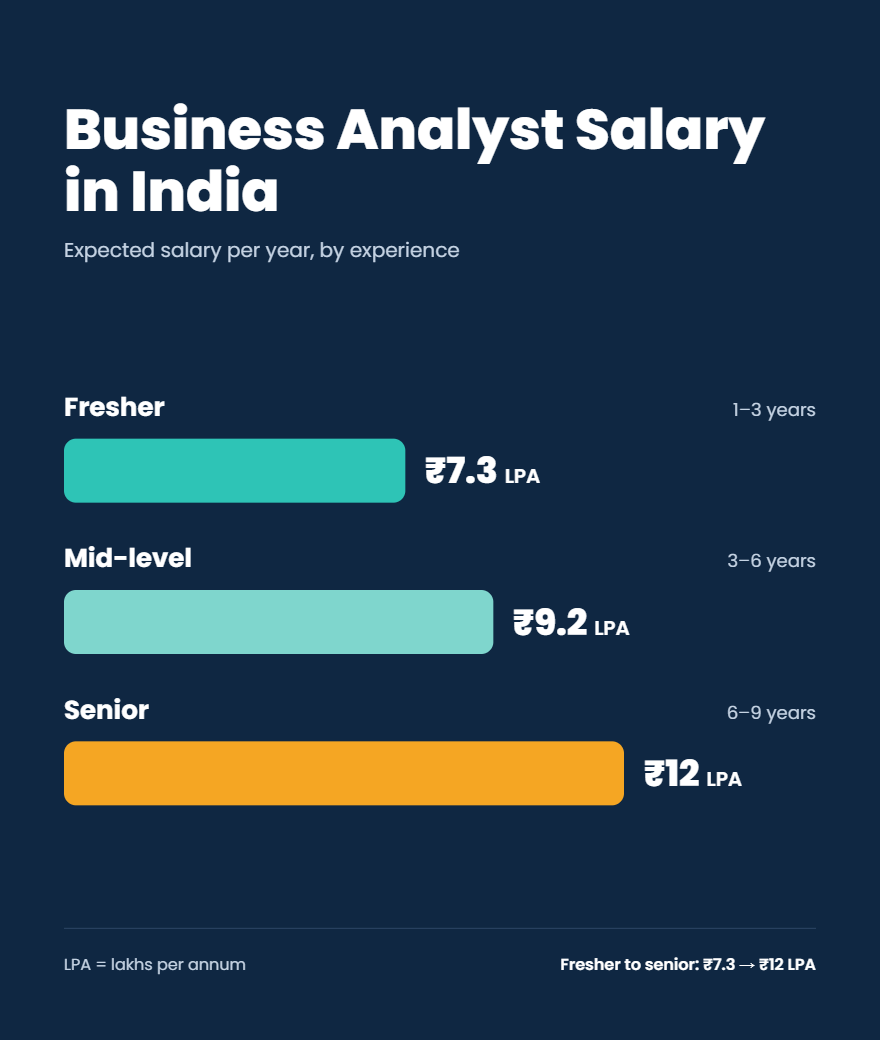
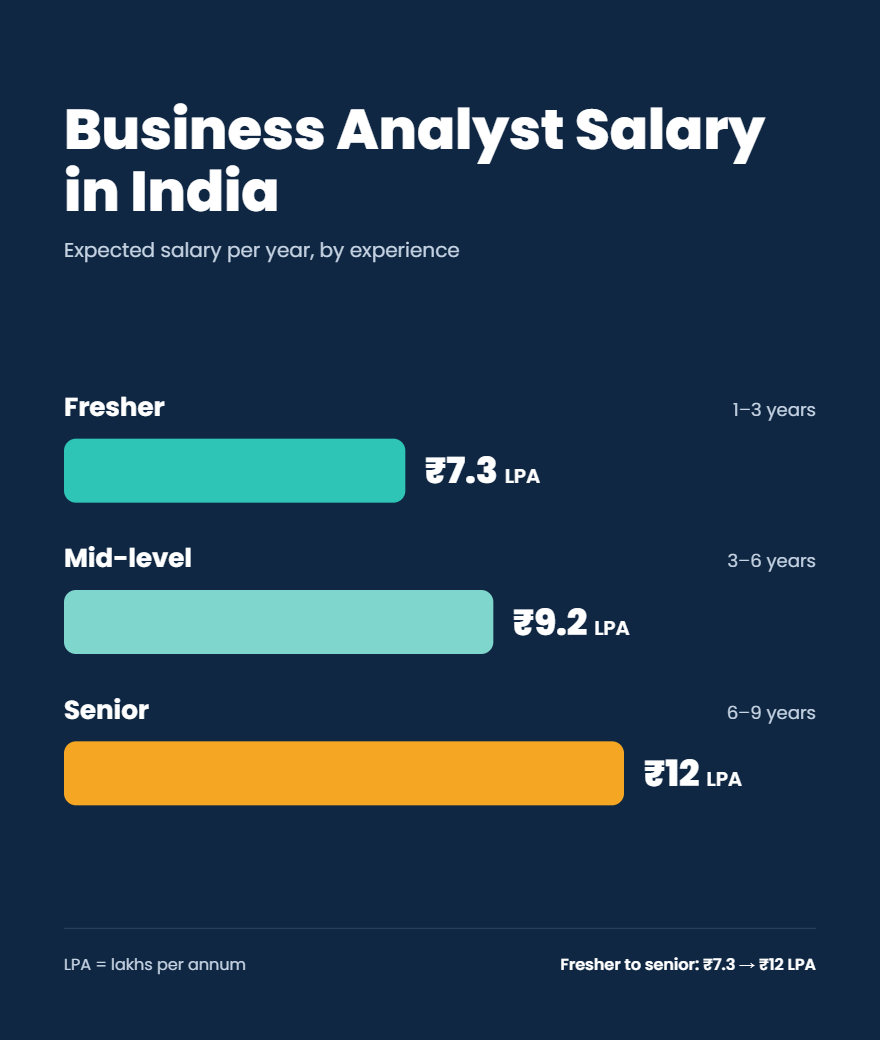
Business analyst salary in India depends on the city, industry sector, and employer. Major cities including Bengaluru, Mumbai, Hyderabad, Pune, Delhi NCR, and Chennai provide openings in areas of IT services, consultancy, banking, finance, and technology firms.
The variations in salary are determined on the basis of experience, skill set, and responsibilities. Bengaluru and Hyderabad stand out as some of the key markets for business analysts, whereas Mumbai provides openings in the banking and finance sector.
Following is the indicative table showing annual business analyst salary in different major cities of India.
City | Average Annual Salary |
Bengaluru | ₹10.5 LPA |
Mumbai | ₹10.2 LPA |
Hyderabad | ₹10.8 LPA |
Pune | ₹10.1 LPA |
Delhi NCR | ₹10 LPA |
Chennai | ₹10.2 LPA |
(Salary source: ambition box)
Salary of Business Analyst Based on Role
There are different roles within the position of the business analyst in India. These roles determine the business analyst's salary. Some of the examples include IT business analyst who specializes in technology and software, data business analyst who works with data sets and reports, financial business analyst who is concerned about budgeting and financial issues and business systems analyst who works with technology and business needs.
Given below is the indicative annual salary chart of various roles of business analysts in India.
Job Role | Annual Salary in India |
IT Business Analyst | ₹11.4 LPA |
Data Business Analyst | ₹5.2 LPA |
Financial Business Analyst | ₹10.5 LPA |
Business Systems Analyst | ₹12.5 LPA |
Senior Business Analyst | ₹16.2 LPA |
(Salary source: ambition box)
Business Analysts identify business problems, investigate process gaps, and recommend effective solutions. Learning root cause analysis can help them understand the underlying reasons behind these issues and make better data-driven decisions.
Industry-wise Business Analyst Salary
Salaries for business analysts in India vary by industry depending on business needs, technical skills, and degree of involvement of the analyst. The industries that involve a lot of work related to data, technology, financial analysis, and improvements offer varied packages to candidates depending on their experience and qualifications.
Below is a list of several industries which hire business analysts, as well as some skills required for successful work in each of these areas:
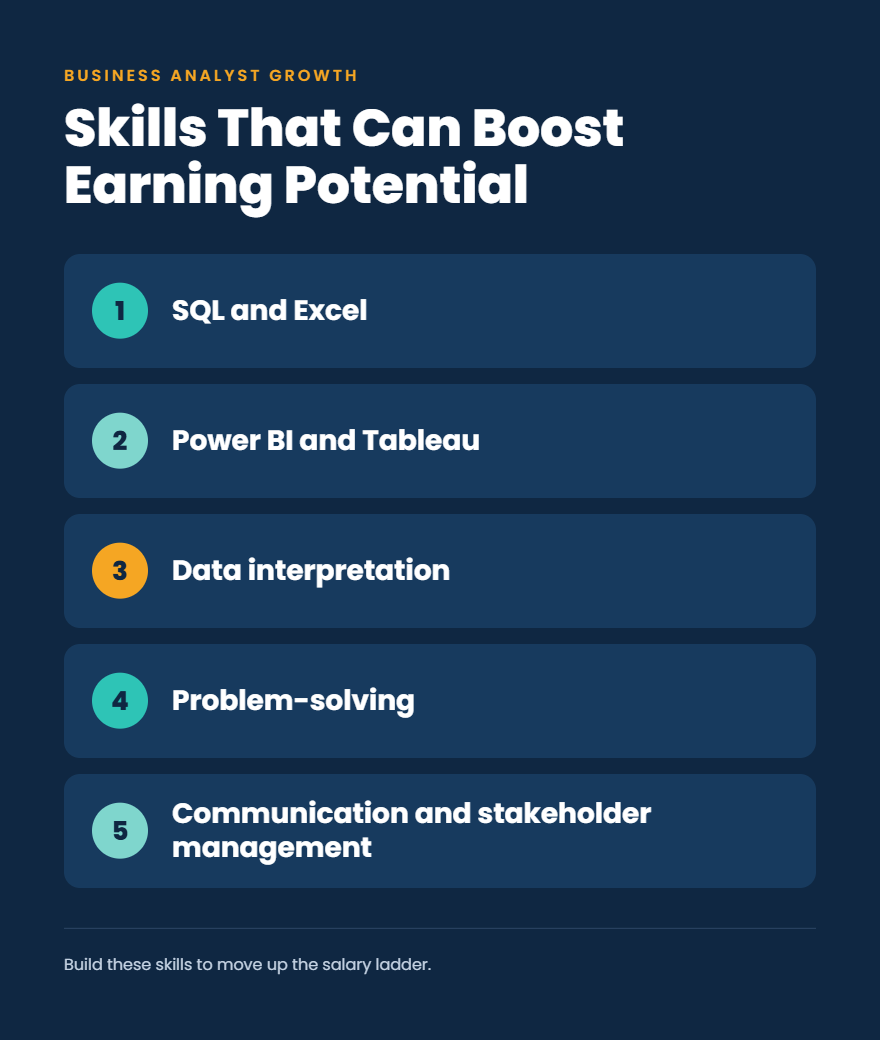
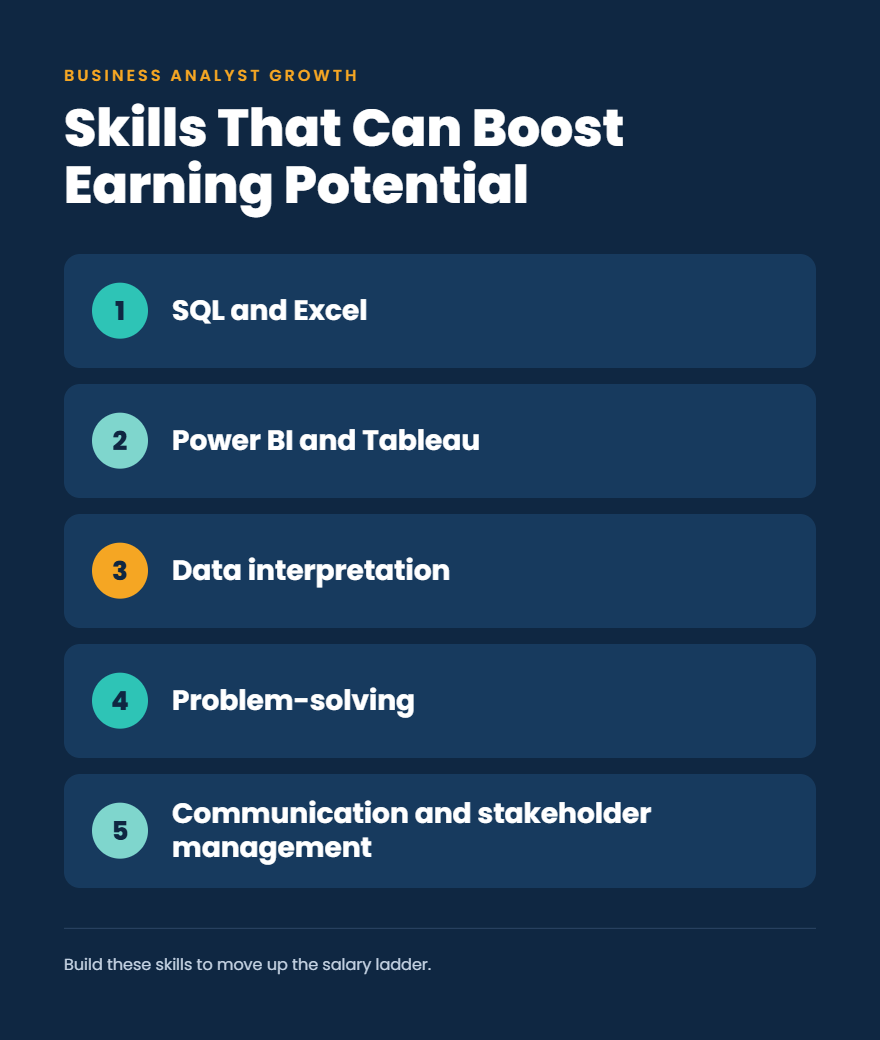
IT (Information Technology): Business analysts cooperate with software developers, gathering requirements, improving workflows, and helping with technology-related projects. Technical skills in SQL, Agile, and software development would be an advantage.
Banking and Financial Services: Analyses of financial data, control of business processes, and improving banking operations are performed by analysts in this field. Financial reporting, risk management, and other skills may help to progress in this industry.
Consulting: Business analysts assist companies in identifying operational problems, analyzing processes, and solving those problems. Problem-solving skills, research, and communication skills are highly valuable.
E-commerce and Retail: Customer behavior, sales numbers, inventory, and overall company performance analyses are done by analysts. SQL and Excel skills are useful.
Healthcare & Pharmaceuticals: Analysts help in business planning, process improvement, reporting, and resource management. Awareness and ability in data analysis will be useful for meeting industry-specific needs.
Manufacturing & Supply Chain: Analyzing manufacturing processes, inventories, and logistics is part of an analyst’s job. Supply chain management awareness, process improvement, and reporting knowledge will prove to be useful.
Telecommunications: Professionals in this field analyze customers' data and operational processes. It may be helpful to have analytical skills and knowledge about business systems.
You can also read how business analytics tools are used across these industries.
Build Your Business Analysis Skills with IIMBx Interested in becoming a business analyst? Build your understanding of business concepts, data analysis, and problem-solving to prepare for opportunities across industries. Key Highlights Analytical Skills: Develop skills in data interpretation and problem-solving. Technical Knowledge: Learn about tools such as Excel, SQL, and Power BI. Business Understanding: Understand business requirements and processes. Career Opportunities: Explore roles across IT, finance, consulting, and other industries.
Explore IIMBx courses to find learning options that align with your career goals. |