


Customer acquisition is the process where the business attracts new customers and converts them into customers who buy products from the business.
Customer acquisition helps organizations to expand their customer base, generate income, raise their brand awareness, and gain a stronger market presence.
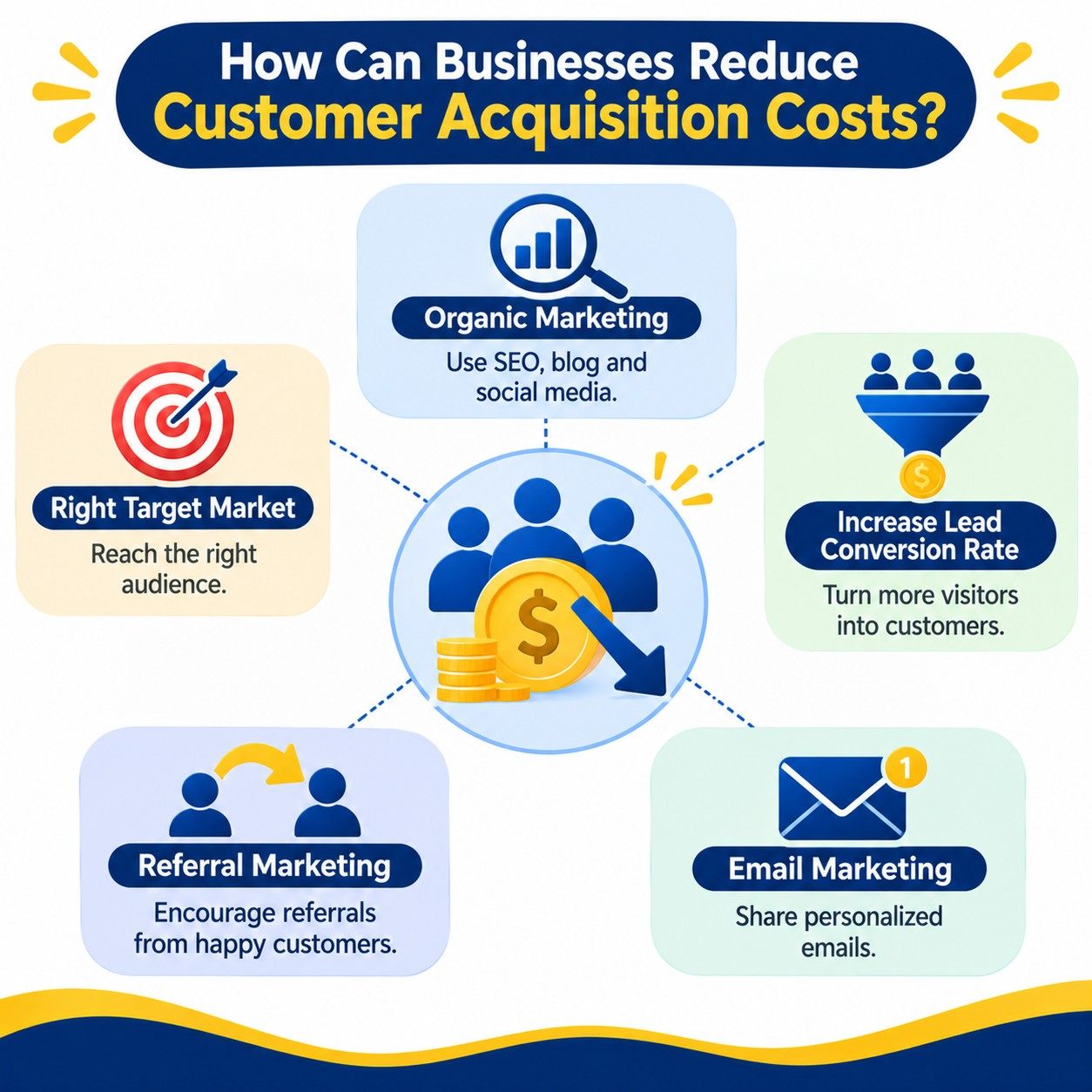
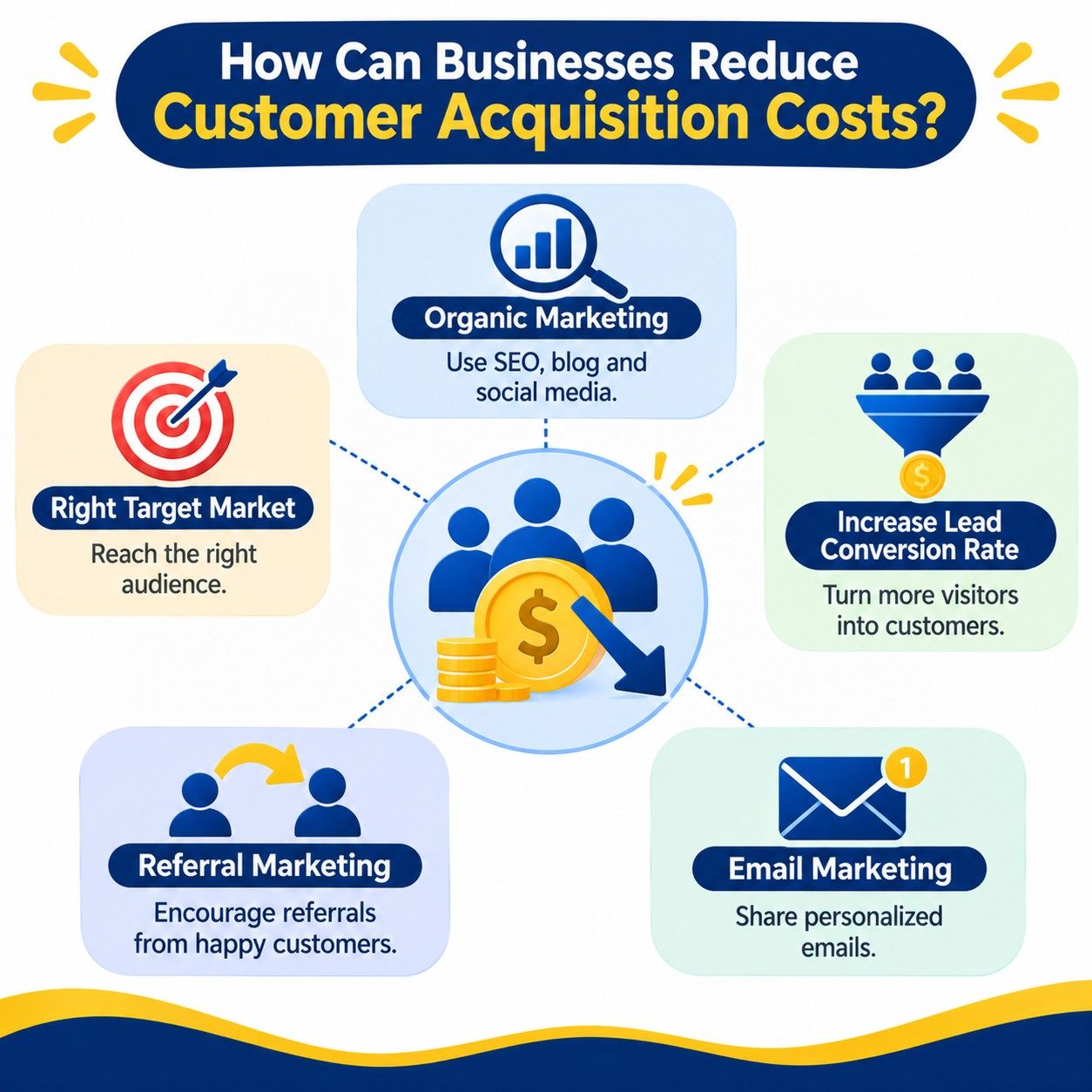
Organizations engage in several methods of customer acquisition, measure Customer Acquisition Cost (CAC), and develop strategies that help them acquire new customers.
In this blog, you will learn about the meaning, goals, channels, costs, measurement, strategies, and phases of customer acquisition.
Purpose of Customer Acquisition
One of the main purposes of customer acquisition is to gain new customers and make them buy the products or services offered by the business. It enables the organization to build up a customer base, earn money, and ensure growth. With the help of different marketing channels, it is possible for the organizations to get the prospective customers, understand their demands, and convert them into customers.
Some of the main purposes of customer acquisition include:
To Attract New Customers: Getting hold of the potential customers who are willing to buy the products or services of the company.
To Increase Sales and Revenue: Converting the potential customers into actual customers and making more chances for earning money.
To Increase Brand Awareness: Building up the brand awareness of the organization among the people.
To Expand the Market Reach: Making contacts with the customers across the different markets.
To Facilitate Growth: To build up a customer base to facilitate the growth of the business.
To Compete: Helping in attracting the customers of the competitor.
What Are the Most Common Customer Acquisition Channels?
Customer acquisition channels are ways in which a business uses various methods to engage prospective customers and persuade them to buy products or services of a company. In this way, businesses are able to reach out to their customers and turn them into loyal purchasers.
Search Engine Optimizations (SEO): Enables companies to increase their website rankings on search engines and gain organic traffic through individuals looking for the related product or service.
Social Media Marketing: Employs social media sites like Instagram, Facebook, LinkedIn, and YouTube to interact with potential clients and promote the product.
Email Marketing: Assists businesses to communicate with potential clients through newsletter, promotional email and product updates.
Paid Advertising: Companies use paid marketing to contact their targeted customers using Google and social media platforms, among others.
Content Marketing: Potential customers are attracted by companies' useful content such as blog posts, articles, and guides among others.
Referral Marketing: Customers refer the products and services of their companies to other people.
Affiliate Marketing: Assists companies to work with affiliates that market their services and products and receive commissions upon successful conversion of the customers.
Why is Customer Acquisition Important?
Customer acquisition is important due to its ability to help organizations attract customers, generate revenue and improve market positioning. This allows organizations to obtain a continuous flow of customers and opportunities to expand business activities. Moreover, an effective customer acquisition strategy will allow organizations to understand customer requirements, enhance marketing activities and establish relations with their target audience.
The main reasons why customer acquisition is important are as follows:
Increases Customer Base: Allows businesses to target new markets and attract new customers.
Growth of Revenue: Generates new clients that pay money for products and/or services, thus generating sales opportunities and increasing revenue of the organization.
Increases Brand Visibility: Makes a brand known to customers by means of various marketing activities.
Competitive Advantage: Enables companies to reach potential buyers and compete in a business environment.
Expands the Scope of Business Operations: Creates a broad customer base and helps companies expand in different directions.
Understanding Customers: Allows businesses to have an understanding of customers' tastes and expectations.
What Is The Cost Of Customer Acquisition?
The Customer Acquisition Cost is a term used to define the total sum invested by the company to acquire a new customer. The expenses can relate to marketing, advertising, sales, salaries of employees, and other promotional activities. The cost is different from one industry to another and depends on the type of the business, marketing channels, and target audience. The businesses determine the CAC in order to measure the investment in acquiring new clients and its efficiency.
The factors that affect the customer acquisition cost are as follows:
Costs of Marketing and Advertising: Cost of paid ads, social media, email marketing, and other marketing campaigns.
Costs of Sales Department: Salaries, bonuses, training, and other costs associated with the sales department.
Costs of Marketing Technology: Cost of CRM systems, marketing analytics software, automation tools, etc.
Costs of Content: Cost of blogging, videos, graphics, web content, and other promotional materials.
Industry Competition: The highly competitive industries need larger investments into marketing.
How Do You Measure Customer Acquisition?
Customer acquisition is measured in terms of KPIs that reflect the effectiveness of attracting potential customers and converting them into customers. The metrics will allow a company to assess the performance of its marketing efforts, the costs of acquisition, as well as the channels that yield the most customers for the company. Thus, customer acquisition measurement can help a business improve its marketing strategy and resource allocation.
The metrics used to measure customer acquisition include the following ones:
Cost of Customer Acquisition (CAC): Represents the total cost incurred in sales and marketing in order to acquire one new customer. This metric allows estimating the efficiency of customer acquisition efforts.
Conversion Rate: Refers to the percentage of potential customers who performed a certain desirable action (buy a product, subscribe for services, etc.)
Customer Lifetime Value (CLV): The total estimated revenue that a company can expect to receive from a single customer during their relationship with the company.
Customer Acquisition Rate: Refers to the rate at which a company acquires new customers in a certain period of time.
Return On Advertising Spend (ROAS): Is used for calculating the income earned from an advertising campaign against the cost incurred on the campaign.
Lead to Customer Conversion Rate: It is used for calculating the conversion rate of leads into actual paying customers. It is useful in analyzing the effectiveness of the sales process.
Customer Retention Rate: Is the rate at which the customers remain loyal to the brand. It is used to determine whether the acquired customers are retained or not.
Learn how to calculate Customer Lifetime Value (CLV), understand its formula, and explore effective strategies to increase customer value and long-term business growth.
How to Develop a Customer Acquisition Strategy?
A customer acquisition strategy requires identifying customers, choosing appropriate marketing tools, and creating campaigns that persuade people to buy goods or services offered by the company. A customer acquisition strategy helps to reach the right customers, keep track of marketing costs, increase conversion rates, and grow consistently. Companies need to analyze their acquisition strategies to see which actions can be improved.
The main steps required for developing a customer acquisition strategy are:
Understand Your Target Audience: Learn about the possible customers according to their age, interests, geographic location, needs, preferences and buying behavior.
Define Your Customer Acquisition Goals: Set your acquisition goals in terms of website traffic, lead generation, conversion rates and number of customers you wish to acquire.
Choose the Proper Acquisition Channels: Depending upon the channels through which your target customers spend their time, choose proper marketing channels such as SEO, social media, e-mail marketing, paid advertising and referral program etc.
Produce Relevant Marketing Content: Create blogs, videos, posts, e-mails campaigns and other content that may help you in solving the needs of your potential customers.
Develop a Customer Acquisition Budget: Distribute your budget in different marketing and sales activities keeping in mind customer acquisition cost and budget availability.
Optimize Your Conversion Process: Optimize landing pages, navigation process, calls-to-action and checkout process of your website so that your potential customers may easily convert.
Measure and Track Your Performance: Track and measure various metrics like customer acquisition cost, conversion rate, customer lifetime value and return on ad spend.
Evaluate and Improve Your Strategy: Analyze the results of your campaign and make necessary changes in your strategy.