

Key highlights
Top 6 negotiation skills that every manager should master are effective communication & active listening, emotional intelligence & empathy, strategic planning & preparation, problem-solving & conflict management, persuasion, influence, & building trust, and making strategic concessions and counteroffers.
Managers have to do negotiation every day, either on deadlines, targets, expectation or budgets.
Good negotiation skills does not mean winning every argument. Rather it means reaching to a conclusion benefitting both parties.
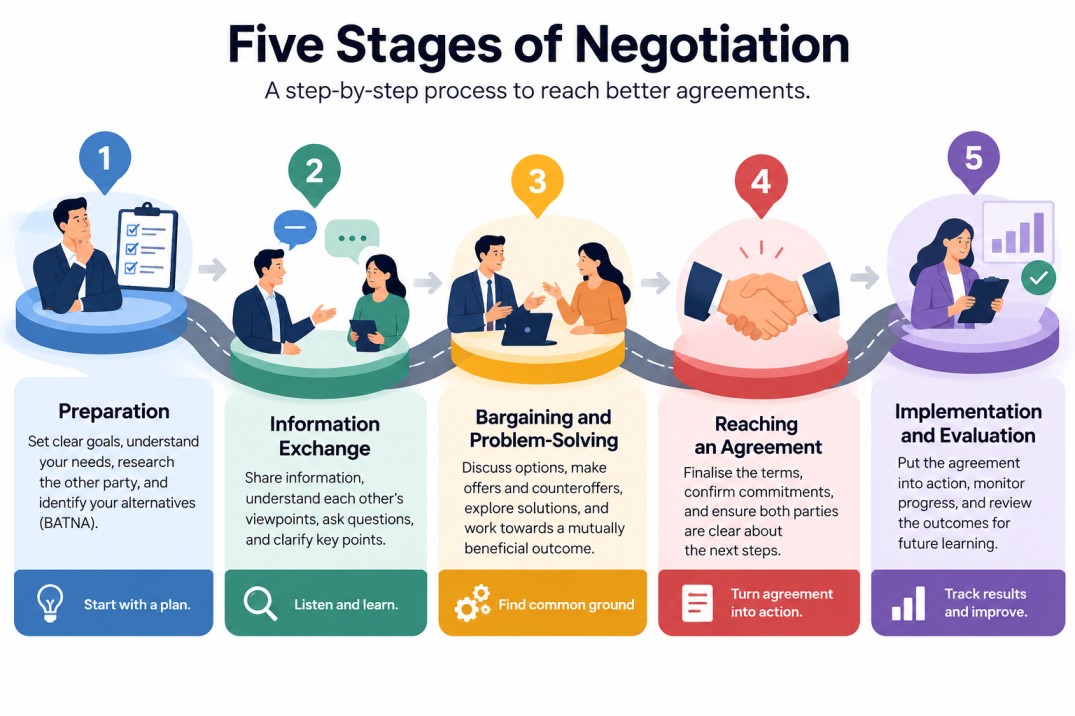
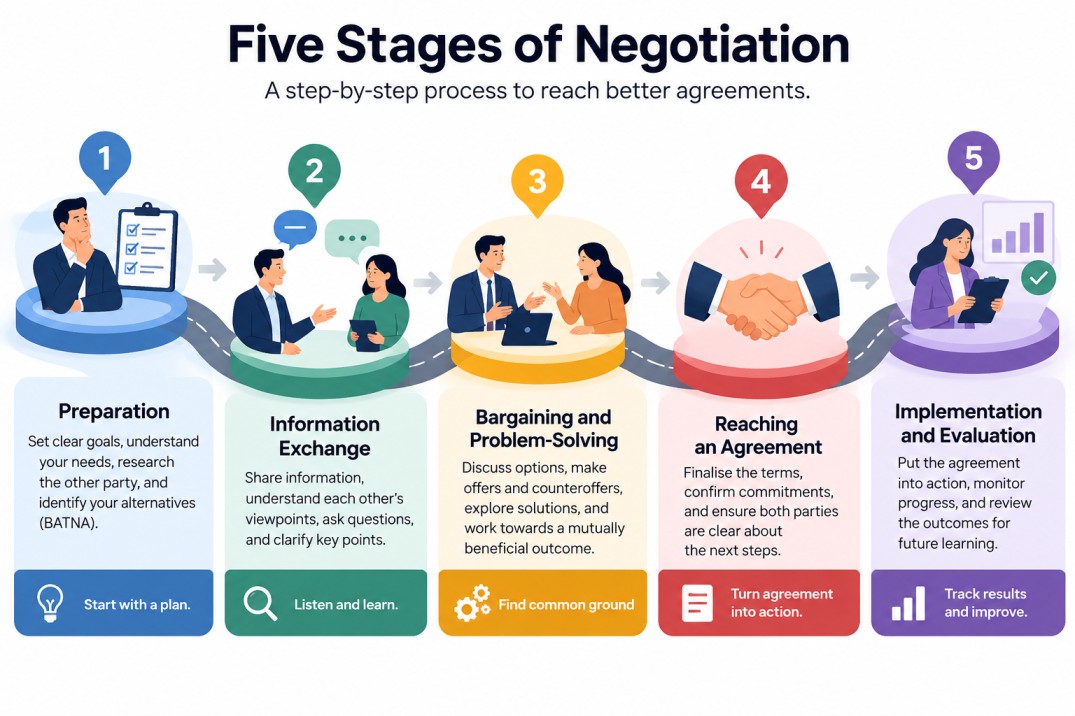
In this blog, you’ll learn about negotiation skills, the ten techniques every manager should know, two main strategies, five stages of a negotiation and practical ways to improve your negotiation skills.
Do read: How to Become a Manager: 7 Steps to Start Your Career Path
What Are Negotiation Skills and Why Are They Important for Managers?
Negotiation skills are the abilities which help you reach an agreement where both sides accept the decision. Since a big part of being a manager means a lot of negotiation in day-to-day life. Hence, it's very important for managers to acquire this skill. Good negotiation starts with understanding what both parties want and what can be done in the scenario. Then come up with a strategy to balance the negotiation so that both parties agree to it.
Here are the reasons why these skills matter so much for managers:
Money and resources. A better vendor contract or budget split goes straight into your results.
People. How you handle a raise request or a team conflict decides whether good employees stay.
Time. Clear agreement reduces the time spent on back-and-forth discussions.
Also read: 10 Major Leadership Theories for Workplace Success
6 Negotiation Skills and Techniques Every Manager Should Master
Here are the most important 6 Techniques Every Manager Should Master:
1. Effective Communication & Active Listening
Communication always starts with active listening. When you listen and understand what the other person is saying, you can respond better. This means listening to their arguments and also understanding what they are trying to say. State your opinion straightforwardly. Do not use vague terms.
Communication is a two-way street, and you can master this only when you listen to others intently. You can negotiate well when you are able to communicate clearly.
2. Emotional Intelligence and Empathy
Someone with emotional intelligence always reads the room before they respond or react. It gives them the benefit of understanding the mood of the other person so that they can react accordingly. The better you can handle your emotions, the more you can counter the other person’s arguments.
Anger causes people to dilute their logical capabilities. Hence being emotionally aware along with having empathy helps you to get to a conclusion better.
3. Strategic Planning and Preparation
Before you enter the room for negotiation, begin by defining the following three things. Your goal, your minimum goal, and your bottom line. Also include your best alternative in case negotiations do not work, often called BATNA.
When you prepare for a negotiation, you have better counteroffers.
4. Problem-Solving and Conflict Management
Focus on what is required to manage the problem. Don't treat the other person as the problem. It creates conflict.
Treat the issue as a shared responsibility and not an individual one. So that it doesn't become an ego clash. Focus on facts rather than emotions. Take in consideration what each one’s expectations are.
5. Persuasion, Influence, and Building Trust
You have to use facts to persuade people. And trust always comes with transparency. Keep the promises you make. And do not commit to everything and anything. This will not make your words unreliable. Hence, agree only when you can keep the promises. Reply when you said you would. Keep your small promises.
Ask about your teammates. Show genuine interest in their work problems. Care about them. These will build trust automatically.
6. Making Strategic Concessions and Counteroffers
Never give something for nothing. If you reduce prices, ask for a longer-term contract. Reduce your concessions gradually, indicating that you’re reaching your bottom line.
When receiving an offer you can’t accept, don’t respond with a simple “no.” Respond with an alternative and a reason why, keeping the discussion going.
Build Your Leadership Skills with IIMBx Certificate in General Management for Emerging Leaders
Ready to strengthen your business knowledge and leadership capabilities? The IIMBx Certificate in General Management for Emerging Leaders helps you develop practical business knowledge, improve decision-making, and prepare for greater leadership responsibilities.
Why choose this program?
Build essential business and management skills
Learn practical concepts to navigate business challenges
Strengthen your decision-making abilities
Develop skills to handle workplace challenges
Prepare for greater leadership responsibilities