Why Is Leadership Management Important?
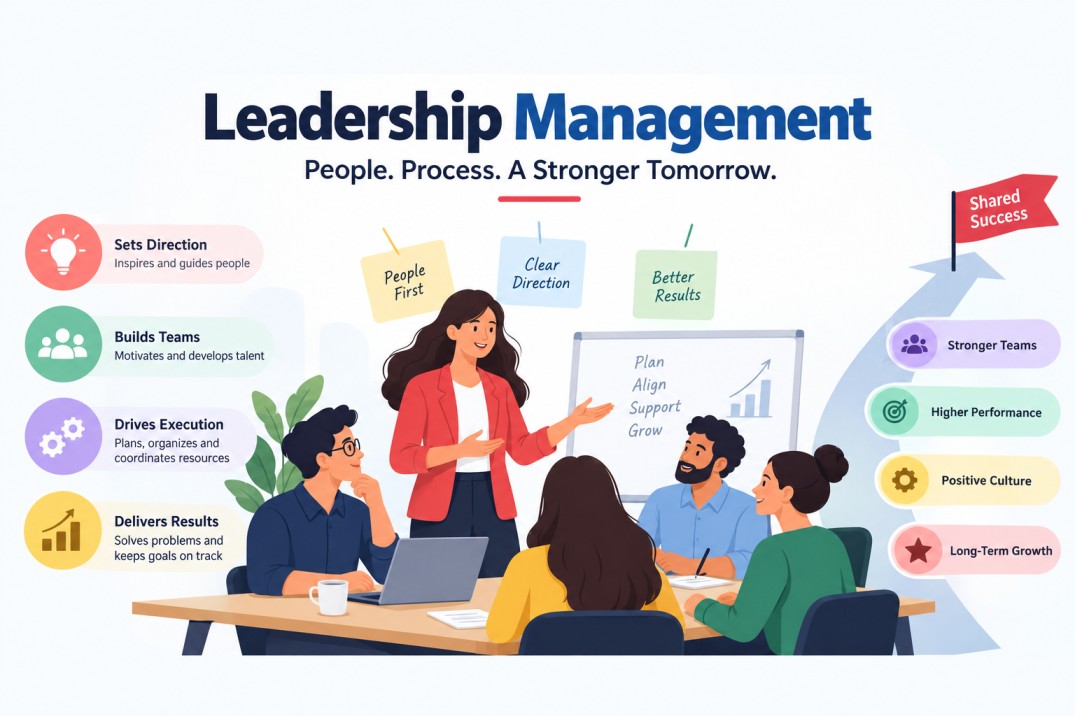
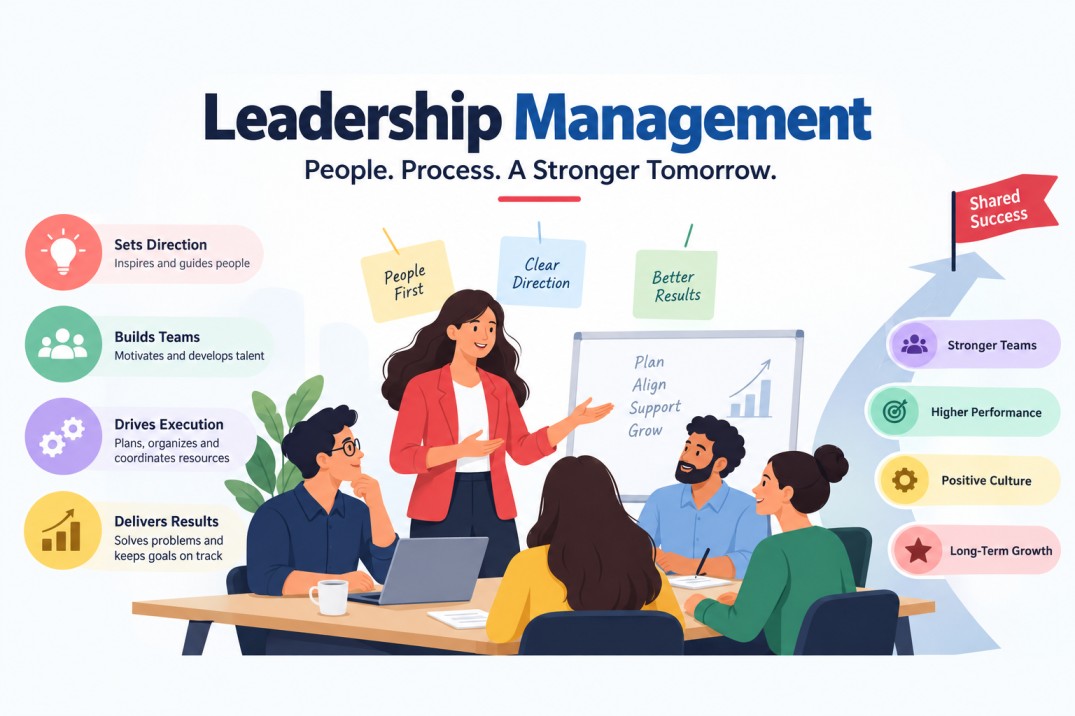
Leadership drives people and gives them direction. Management gives that direction, a structure.
A manager who prioritizes only process with no people skills will burn out their team.
A manager who's all charisma and no structure will miss deadlines and confuse everyone about priorities.
Leadership management makes sure to prevent this kind of failure.
A strong Leadership management helps employees get a better understanding of what they're working toward. How their work contributes to a larger goal. It also creates room for feedback, development, and course correction when plans don't work as expected.
The value shows reality. Teams make decisions faster, managers addresses problems earlier, and employees have a clearer sense of responsibility.
Leadership and Management: How Are They Connected?
Leadership and management aren't the same, yet they aren't totally different. They overlap, but they still remain in two separate disciplines.
| |
| |
| |
| |
| Maintains operational control |
| |
A good manager without leadership skills can keep a team stable. A good leader without management skills can inspire a team right into chaos. A leader who only communicates a vision can struggle to turn that thought into results. Effective leadership management connects the two to get optimal results.
How Does Leadership Management Work in the Workplace?
Leadership management isn’t just about making big decisions or holding a senior title. It happens in the small, everyday moments that keep a workplace moving.
For example, a manager might explain why a task needs to be done a certain way rather than simply handing it over. A team leader may step in when two employees have a disagreement, helping them resolve it before it starts affecting the project. A department head might review quarterly performance while also taking the time to check in with an employee who is having a difficult time.
Even a routine Monday stand-up meeting can be leadership management in action. The leader sets priorities, asks about roadblocks, and makes sure everyone knows what needs to be done.
At its core, leadership management is about guiding people, making thoughtful decisions, handling challenges, and helping teams work better together.
Key Principles of Leadership Management
Good leadership management relies on a few practical principles that shape how managers make decisions and work with people.
Set Clear Direction
People can't move towards a goal they don't clearly understand. Managers turn broad organisational goals into team specific goals. Vague goals like "improve performance" don't make much sense in practice. Specific goals give people something concrete to work with.
Communicate With Clarity
Good communication isn't about sending more messages. It's about making expectations, priorities and decisions easy to understand. If employees have to guess what matters, execution will suffer.
Build Trust and Accountability
Trust gives people room to act. Accountability makes ownership visible. A manager shouldn't micromanage everything. They should agree on expected outcomes, provide support to the employees, and review their progress.
Empower Through Delegation
Delegation isn't simply handing over a list of tasks. It means giving someone enough authority to make relevant decisions while remaining accountable for the result.
Develop People
Strong managers don't measure their success only by what they personally accomplish. They also build the capabilities of their team. Regular feedback, coaching, challenging them with assignments, and opportunities to take ownership drives more results.
Adapt to Context
The same approach won't suit every situation. A new employee may need more time to adapt and learn. Whereas an experienced team member may perform better with greater autonomy. Good managers adjust without becoming inconsistent.
What Are the Functions of Leadership Management?
The functions of leadership management connect people, plans, and results. It is a continuous cycle rather than a one-time process.
Setting Goals and Direction
Managers translate and give clear and attainable goals to employees on the basis of priorities. This is how strategy turns into action. A manager takes broader company objectives and breaks them into specific targets their team can chase with timelines attached.
Organizing and Delegating
Managers allocate responsibilities according to capability, workload and the decisions each person can make. Their job is making sure nothing important falls through the cracks.
Motivating and Guiding Teams
Numbers and deadlines can pull the team to a certain extent. Motivation isn't limited to financial rewards. Purpose, recognition, autonomy, growth opportunities and a manager's everyday behavior all influence how people approach their work.
The manager's main role involves keeping morale up, recognizing effort, and stepping in when someone's engagement starts slipping.
Monitoring and Improving Performance
Managers need to know whether work is moving in the right direction. Regular reviews and useful feedback help identify problems before they become expensive ones.
Tracking progress isn't about micromanaging. It's about catching problems early, whether that's a missed metric or a process that's quietly become inefficient and fixing it before it snowballs.
Managing Change
Change causes uncertainty. Managers have to help people navigate through that change without losing productivity or confidence along the way.
Essential Leadership Management Skills
Leadership management skills combine interpersonal judgement with practical ability. Some skills are naturally stronger in certain people. Some skills can be developed through experience, feedback, and deliberate practice.
Here are the skills necessary:
| |
| Explaining priorities and expectations |
| Choosing a course of action under uncertainty |
| Understanding reactions and managing relationships |
| Connecting daily work with larger goals |
| Giving people ownership of meaningful work |
| Addressing disagreements constructively |
| Helping employees improve capability |
| Changing approach when circumstances shift |
Types of Leadership in Management
There isn't one best type of leadership in management for every team or situation. Leadership styles in management differ based on how decisions are made, how much employee involvement is invited, and how much control the manager has.
What works for a startup founder rarely works the same way in a hospital ward. So, knowing the different leadership management styles helps to work better.
Autocratic Leadership
In this, managers have all the decision-making authorities. He gives clear instructions based on the situation. This can help during urgent situations, but excessive control can reduce employee ownership and productivity.
Democratic Leadership
In this style, employees have a stronger voice in decisions. It can produce useful perspectives, although reaching an agreement may take more time.
Transformational Leadership
This style focuses on vision, change, and employee development. It can be valuable when an organisation needs people to move beyond established ways of working.
Transactional Leadership
This approach uses clear expectations, rewards and consequences. It can work well where responsibilities and performance measures are straightforward.
Situational Leadership
In this style, the manager changes their approach according to the task, individual employee capability, and circumstances. That flexibility is useful when a single leadership style doesn't fit the whole team.
Common Leadership Management Challenges and Mistakes
Even experienced managers go through issues. The fix isn't always easy. Sometimes the manager needs to clarify one decision, give someone ownership, or have a direct conversation that has been postponed for too long.
The common challenges and mistakes are as follows:
Common leadership management mistake | |
| Managers control tasks instead of focusing on outcomes. |
| Employees aren't sure what success looks like. |
Avoiding difficult conversations | Small performance or relationship issues become bigger over time. |
| Managers use the same approach regardless of the person or situation. |
| Managers hold on to decisions that others could handle. |
| Short-term targets take priority over employee development. |
How to Measure Effective Leadership Management
You can't understand if it's working or not if you can't track or measure it. The biggest test is to see what happens when the manager holds back. If the team can make sound decisions, solve routine problems, and stay aligned with its goals, the manager has built capability rather than dependence.
Still a few practical indicators are there to help it:
Useful indicators include:
Conclusion
Leadership management brings two skills together to achieve an optimal result. It brings a clear direction to work, creates a channel of honest communication, and flexibility of work. It isn't simply about having authority or choosing the right leadership style. It helps the managers understand when to direct, when to delegate, and when to listen.
It requires managers to deliver results while building the people and capabilities that make those results sustainable.