
IIMBx - Digital Learning Foundation

10 Effective Negotiation Strategies Every Manager Should Know

By Anushwa Raj

Updated on Oct 30, 2026 | 10 min read

Share:

The 10 effective negotiation strategies that all managers should master include knowledge of what the best alternative to a negotiated agreement will be (BATNA), knowing how interests differ from positions, active listening, self-control, and using open-ended questions. 

Apart from these mentioned negotiation techniques, there are many other ones, which include proper trade-offs, handling the first offer, providing multiple options, creating trust, and planning implementation of the agreement.

  • Preparation and communication: Know your alternatives, understand the other party's interests, listen carefully, and ask questions to uncover their priorities.

  • Reaching workable agreements: Use trade-offs instead of one-sided concessions, support proposals with objective information, build rapport, and agree on clear implementation steps.

This guide explains 10 practical negotiation strategies managers can use to resolve team conflicts, secure resources, handle business discussions, and build strong working relationships.

Strong negotiation skills are an important part of effective management. Take your management knowledge further with the Certificate in General Management for Young Leaders, designed to help you develop business understanding, strengthen decision-making skills and prepare for leadership responsibilities. 

What Are the 10 Effective Negotiation Strategies Every Manager Should Know?

Negotiation needs preparation, patience and an understanding of what both parties want. For instance, a manager negotiating a project deadline may need to consider the team's workload while meeting the client's expectations.

The following negotiation strategies can help managers approach such situations in a structured and practical way.

1. Define Your Objectives and Negotiation Limits

Before starting a negotiation, decide what you want to achieve. Be clear about which terms are essential, where you have room to adjust and what you cannot accept.

For example, if you are negotiating a project deadline, identify the earliest realistic completion date, the resources required and the maximum extension you can offer.

Keep these three things in mind:

  • Primary objective: What outcome do you want?

  • Flexible terms: What can you adjust to reach an agreement?

  • Limit: At what point should you reconsider the proposal?

Having these points ready prevents you from making rushed decisions during the discussion.

2. Research the Other Party and Understand Their Priorities

A negotiation becomes easier when you understand the concerns of the person sitting across the table. Take time to learn about their expectations, business needs, constraints and possible objections.

Suppose a manager is negotiating a contract with a vendor. The vendor may be more concerned about payment timelines than the overall contract value. Understanding this priority could help the manager suggest revised payment terms without increasing the total cost.

Before the meeting, consider:

  • What does the other party want from this discussion?

  • What challenges or restrictions might they be facing?

  • Which parts of the proposal are likely to concern them?

  • What alternatives could address their priorities?

This preparation helps you make relevant proposals instead of relying on assumptions.

3. Identify Your BATNA Before Entering a Negotiation

BATNA stands for Best Alternative to a Negotiated Agreement. It refers to the most suitable option available if the current negotiation does not lead to an agreement.

Knowing your BATNA helps you understand when to continue negotiating and when to walk away.

For instance, if a company is negotiating with a software vendor, its BATNA could be choosing another provider that meets its requirements. This gives the manager an alternative if the vendor refuses to revise unreasonable terms.

Your BATNA should be practical, not just an ideal backup plan. Identify the available alternatives, assess their costs and understand what each option would involve.

4. Build Rapport Before Discussing Terms

People are more likely to have a constructive discussion when they feel respected and heard. Building rapport helps establish a comfortable working relationship before the conversation moves to difficult terms.

This does not mean agreeing with everything the other party says. It means approaching the discussion professionally and showing genuine interest in their perspective.

A manager negotiating with another department, for example, can begin by acknowledging its workload and explaining the shared project objective before discussing resource allocation.

Simple practices can help:
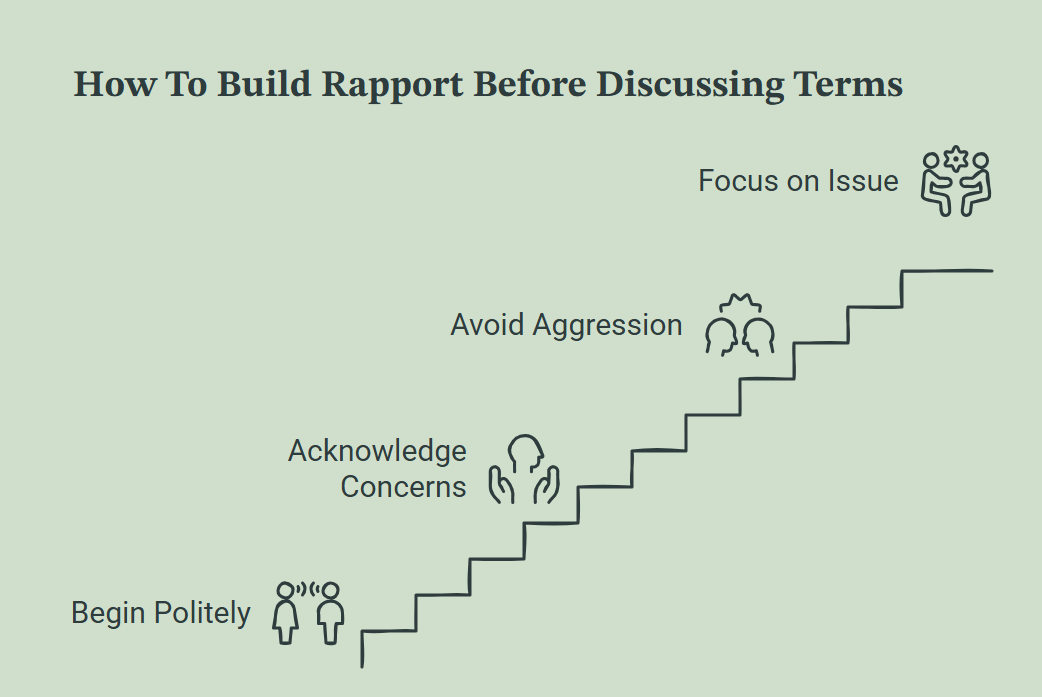
How To Build Rapport Before Discussing Terms

Rapport makes it easier to discuss disagreements without turning them into personal conflicts.

5. Practise Active Listening and Ask Open-Ended Questions

Negotiation is not just about presenting your proposal. It also involves understanding what the other person is saying and why they hold a particular position.

Active listening means paying attention, asking relevant questions and confirming your understanding before responding.

Instead of asking, "Can you reduce the price?", a manager negotiating with a supplier could ask, "Which parts of the current pricing structure have the most flexibility?"

Open-ended questions encourage the other party to explain their concerns and suggest possible solutions.

Useful questions include:

  • What is your main concern with this proposal?

  • Which terms would you like to revisit?

  • What would make this arrangement more workable for your team?

  • Are there alternatives we have not considered?

These conversations often reveal options that may not have been obvious at the beginning.

6. Focus on Shared Interests Instead of Fixed Positions

A position is what someone says they want, while an interest is the reason behind that demand. Understanding this difference can help managers find solutions that address the actual problem.

Consider a situation where a client asks for a project to be completed two weeks earlier. Their position is a shorter deadline, but their underlying interest may be launching the product before a major industry event.

Instead of simply accepting or rejecting the deadline, the manager could discuss delivering the most important features first and completing the remaining work later. This approach shifts the discussion from competing demands to shared interests. It is one of the more useful business negotiation strategies when both parties need to maintain a long-term working relationship.

7. Use Anchoring and Evidence to Support Your Proposals

Anchoring refers to introducing an initial figure or proposal that influences the direction of a negotiation. The first offer can shape expectations, so managers should make sure their proposals are reasonable and supported by evidence.

For example, when negotiating a project budget, a manager can present an estimated amount based on resource requirements, previous project costs and expected timelines.

A strong proposal should include:

  • Relevant data and cost estimates.

  • Market or industry benchmarks, where available.

  • Clear reasons behind the proposed terms.

  • Supporting details that the other party can review.

Avoid using arbitrary figures just to influence the conversation. Evidence makes your proposal easier to understand and discuss.

8. Make Strategic Trade-Offs Instead of One-Sided Concessions

A negotiation often involves adjusting some terms to reach an agreement. However, managers should avoid giving up important conditions without receiving something in return.

A trade-off means offering flexibility on one point in exchange for a benefit on another.

For example, a vendor may agree to a lower price if the company commits to a longer contract. Similarly, a manager may approve a revised deadline if the client reduces the scope of the project.

Before making a concession, ask yourself:

  • What am I giving up?

  • What am I receiving in return?

  • Does this change affect the overall objective?

  • Will the agreement remain workable in the long run?

These negotiation strategies help managers avoid one-sided agreements and keep discussions balanced.

9. Manage Emotions, Timing and Pressure During Difficult Discussions

Negotiations can become uncomfortable when there are disagreements over money, deadlines, responsibilities or performance. Reacting emotionally can make the discussion more difficult and affect professional relationships.

Managers should remain calm, even when the other party disagrees with their proposal. If the conversation becomes tense, taking a short break or rescheduling the discussion may be more useful than forcing an immediate decision.

Timing also matters. Avoid negotiating important terms when either party is unprepared or under unnecessary pressure.

For example, if a team member disagrees with a sudden change in responsibilities, a manager can first understand the reason for the concern and then discuss possible adjustments.

A calm approach allows both sides to focus on the issue rather than the disagreement.

10. Document Agreements and Clarify Next Steps

A negotiation is not complete simply because both parties verbally agree. The final terms should be recorded so everyone understands what has been decided.

For a project-related agreement, the manager should document:

  • Agreed deadlines and deliverables.

  • Responsibilities assigned to each party.

  • Payment terms or resource commitments, where applicable.

  • Conditions, exceptions and pending decisions.

  • Follow-up dates and review requirements.

Share the final record with everyone involved and give them an opportunity to clarify any misunderstandings. This reduces confusion and makes it easier to hold each party accountable.

What Makes Negotiation an Essential Skill for Managers?

Managers regularly work with people who have different responsibilities, expectations and priorities. They need to bring these interests together while keeping business objectives in view.

Strong business negotiation skills help managers handle disagreements, allocate resources and maintain professional relationships. Their importance becomes clear in three common workplace situations.

Negotiation in Team Management and Workplace Conflicts

Managers often have to resolve disagreements about workloads, responsibilities, deadlines and team priorities.

For example, two employees may disagree over who should handle a particular task. A manager can understand both perspectives, review the team's responsibilities and agree on a fair division of work.

Negotiation helps managers:

  • Resolve disagreements without escalating conflict.

  • Balance workloads and individual expectations.

  • Set clear responsibilities and deadlines.

  • Maintain cooperation within the team.

Negotiation With Clients, Vendors and Business Stakeholders

External negotiations often involve pricing, service expectations, delivery schedules and contract conditions. Managers must consider the organisation's requirements while understanding what the other party expects.

For instance, a client may request additional work without changing the agreed budget. The manager can discuss the extra resources required and negotiate a revised scope or timeline.

These conversations help avoid misunderstandings and create clearer expectations between business partners.

Balancing Business Goals With Long-Term Relationships

A manager may need to protect the company's interests without damaging a relationship with a client, employee or supplier.

A competitive negotiation strategy may focus on securing favourable terms, but managers should also consider whether the agreement supports future cooperation.

For example, a company may receive a lower price from a supplier by negotiating a longer contract. However, it should also consider service quality, flexibility and the supplier's ability to meet future requirements.

The aim is to reach an agreement that supports business needs without creating avoidable problems later.

Handling workplace disagreements also requires strong people management skills, particularly active listening, empathy and conflict resolution. Explore these people management skills every leader needs to understand how managers can build better working relationships and address team challenges.

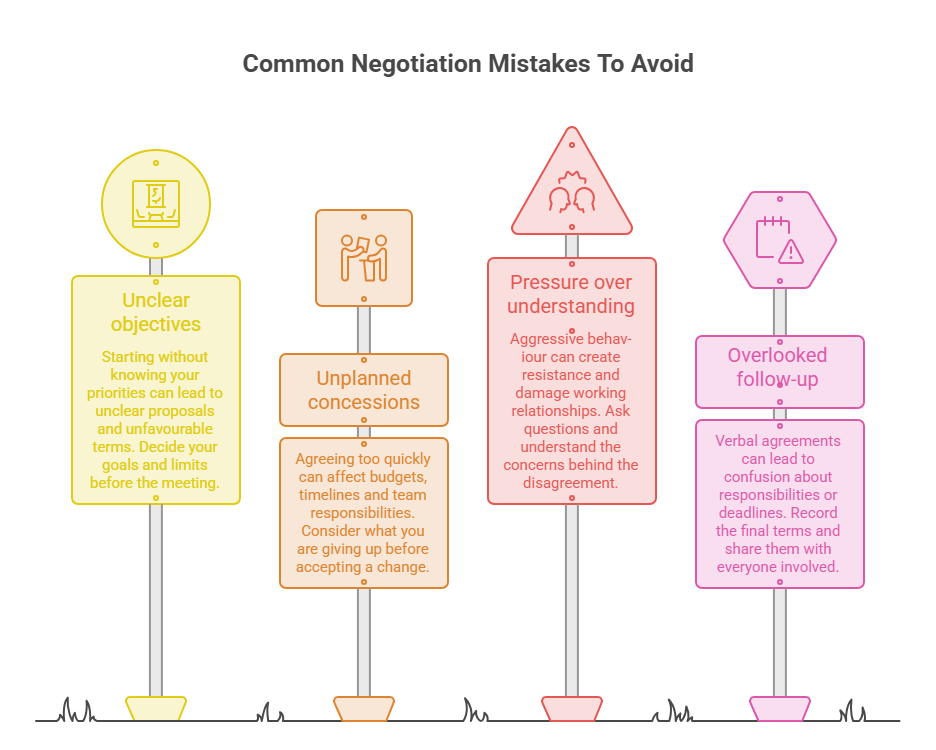
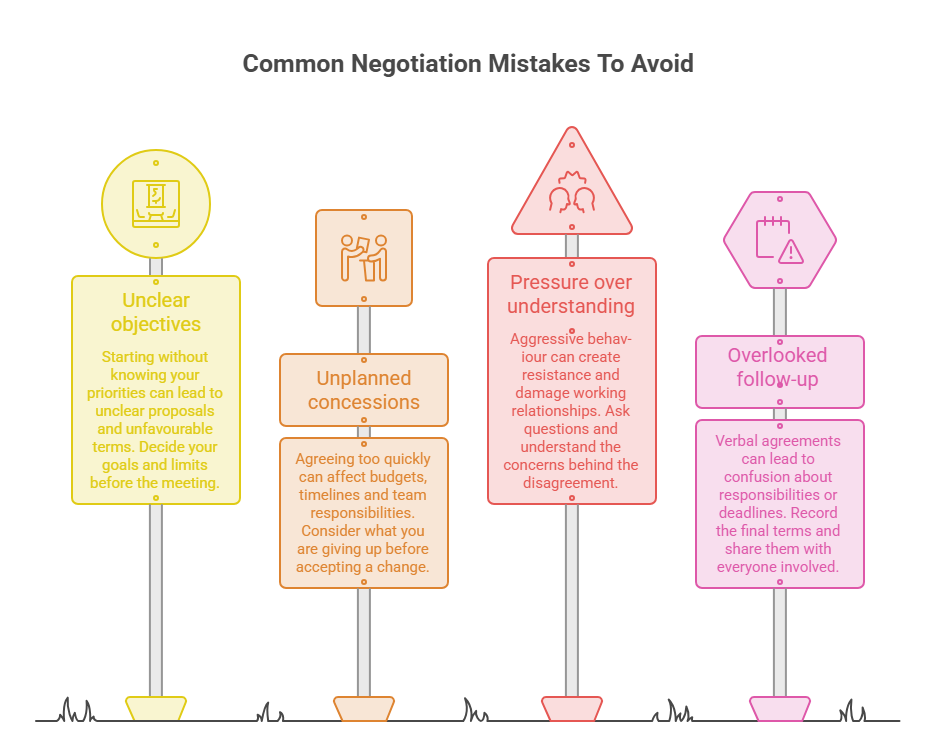
What Common Negotiation Mistakes Should Managers Avoid?

Even experienced managers can make mistakes when they enter discussions without preparation or let pressure influence their decisions. Recognising these issues can help them handle future negotiations more carefully.

Common Negotiation Mistakes To Avoid

Avoiding these mistakes makes negotiation strategies easier to apply in everyday management situations.

How Can Managers Develop Their Negotiation Skills Over Time?

Negotiation improves with practice. Managers can learn from everyday workplace discussions, review their decisions and try different approaches depending on the situation.

Here are a few ways to strengthen these skills:

Practise Through Role-Playing and Workplace Scenarios

Role-playing gives managers an opportunity to practise difficult conversations before they happen. They can simulate situations such as negotiating a budget, resolving a team disagreement or discussing contract terms with a client.

Taking turns playing both sides can also help managers understand different expectations and concerns.

Review Past Negotiations and Identify Areas for Improvement

After an important discussion, take a few minutes to review what happened.

Consider whether the objectives were clear, whether the other party's concerns were understood and whether the final agreement met the intended requirements.

It will also provide opportunities for managers to identify instances of where the wrong concession was made and where additional inquiries could have been made.

Seek Feedback and Learn Different Negotiation Approaches

Feedback from colleagues, senior managers and team members can reveal areas that may be difficult to notice on your own.

Also, different methods of negotiations can be learned by managers, such as collaborative, competitive and compromising. Understanding when each approach is suitable helps them adapt to different workplace situations.

Want to understand negotiation beyond these 10 strategies? Read our guide on Negotiation Skills: 6 Techniques Every Manager Should Master to explore different negotiation approaches, the stages of negotiation and practical ways to strengthen your skills.

Conclusion

Negotiation plays an essential role in team management, client relations and business management. The correct negotiation skills make it possible for managers to get ready for negotiations, identify different priorities and come to an agreement not forgetting their goals.

There is no single approach that works in every situation. A discussion about a project deadline may require collaboration, while a contract negotiation may involve careful research, evidence and trade-offs. Managers who practise listening, preparation and clear communication can handle these situations more effectively.

Strong client relationships go beyond closing a deal. Read our guide on Customer Retention to learn how businesses can build lasting customer relationships and encourage repeat business.

Anushwa Raj

Anushwa Raj

SEO & Content Marketing Specialist

4+ of articles published


Current role in the industry :

Consultant

Education Qualification :

B.Com Hons. with Research

About

Anushwa Raj is an SEO and content marketing professional at upGrad, working across SEO articles, website copy, keyword research, and content strategy. She enjoys creating reader-first content that balances search intent with clarity, making complex topics simple, useful, and engaging.

Follow me on :

No blogs published yet.

Latest Blogs

minimum viable product
Nov 1st, 2026

minimum viable product

A Minimum Viable Product (MVP) refers to the most fundamental form of a product with basic features, intended to prove an idea among initial users.

Frequently Asked Questions

General