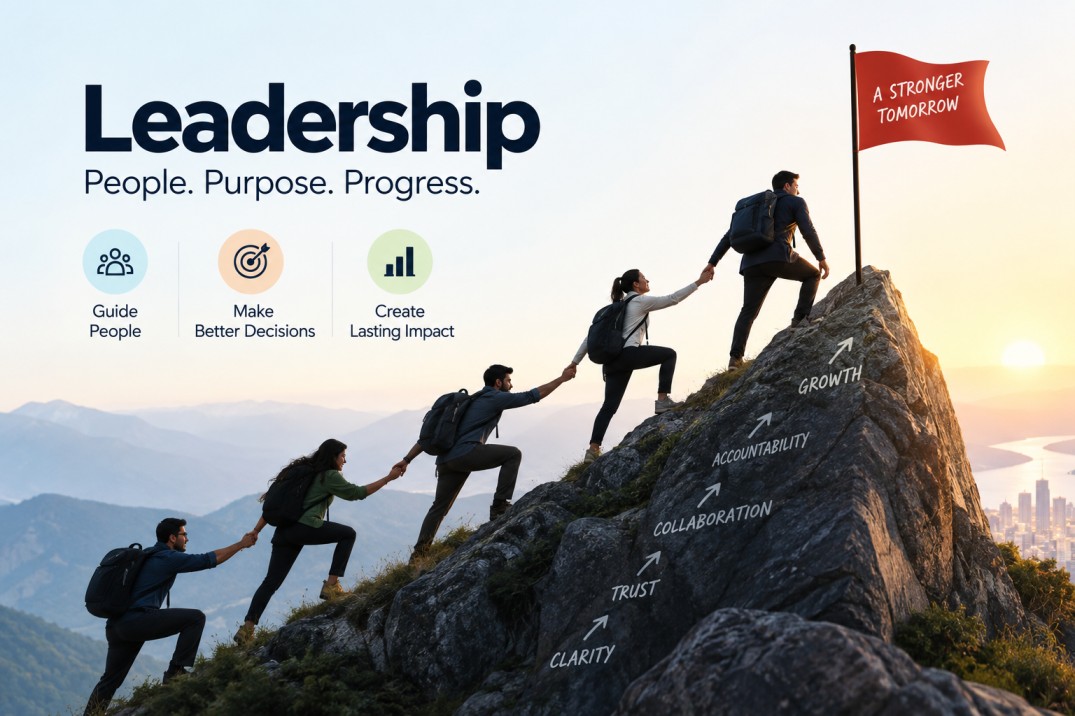
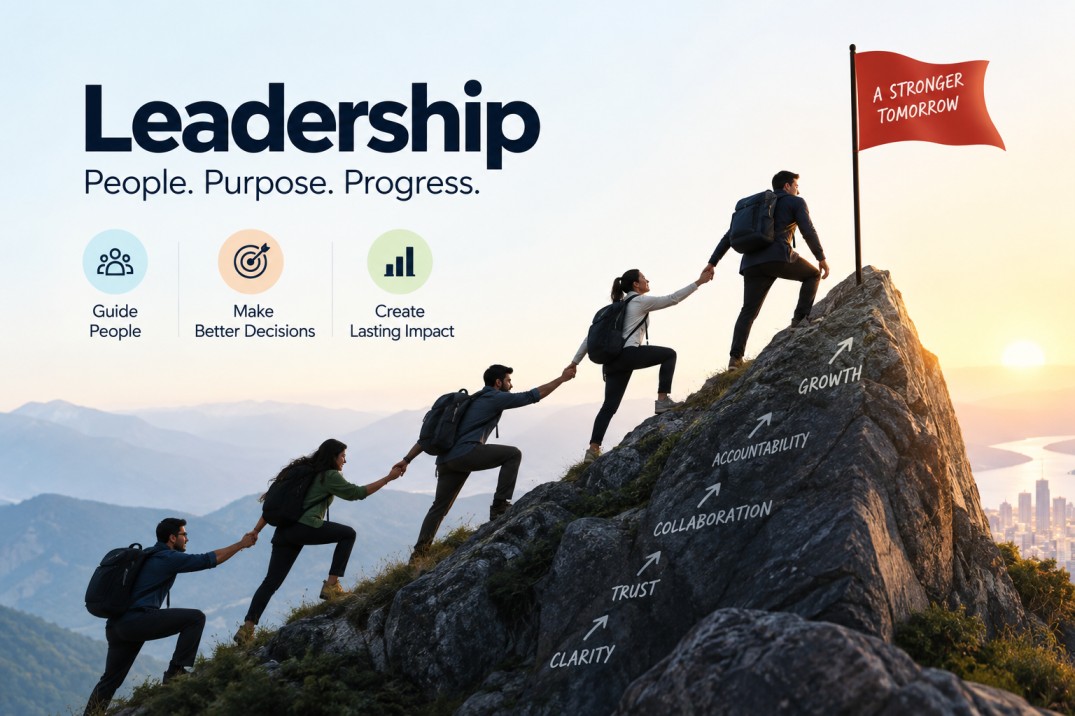
Leadership is the process of encouraging people to reach a shared goal or purpose. It involves setting direction, making decisions, communicating clearly, and creating an environment for people to work effectively. Leadership is not only about being in control. It's an important skill for managers who want to bring positive change to any organisation.
It means pushing people to reach goals that they could not reach on their own.
Why Is Leadership Important in an Organization?
Leadership gives people direction. It also affects how teams respond when plans change or problems appear. It shapes everything. Poor leadership drains a company slowly. Whereas good leadership drives the company towards success.
It is something that can break or make a successful organisation. Here are a few reasons why leadership is so important for any organisation.
Employee Performance
Good leaders clarify the goals and what they expect from the employees. Employees know what they need to do and why it matters. Clear expectations and timely feedback help people stay focused. Recognising their work gives them a reason to keep improving their individual performance.
People work harder for leaders they respect. A manager who sets clear expectations and removes hurdles gets more results than one who just orders and disappears.
Motivation and Engagement
People work better when they feel their work matters. When leaders explain goals, listen to employees, and give them some ownership of their work, they feel valued and engage more.
Organizational Culture
Leaders influence workplace culture through their daily actions. What they encourage and tolerate tells employees what really matters. When leaders act consistently, they can build trust, accountability, teamwork, and respect.
Decision-Making
Leaders rarely have all the answers. They need to assess the information available, listen to different views, and make a decision. Good leaders also take responsibility for what happens next.
Change Management
Change can make people uncertain or uncomfortable. Especially when they don't fully understand why something is happening. Leaders who help by explaining what is changing and why, listen to concerns, and give employees clear direction as they adjust see fewer problems from the employees' end.
Team Effectiveness
Strong leadership helps people work better together. Leaders who clarify roles, remove confusion, and address conflicts create space for employees to share ideas and take responsibility for their work.
Leadership brings individual skills together to achieve a common goal. Without effective leadership, even talented people may work in different directions instead of working as a team.
Strategic Execution
A strategy means nothing if it stays on paper. Leaders turn plans into action by setting priorities and connecting them to everyday work. They track progress and make changes when the situation calls for it.
Key Elements of Leadership
Leadership brings several activities together. Here are the key elements of leadership:
Vision and Direction
Leaders help people understand what their goals are and what they have to do to get there. Without direction, even talented teams lose motivation to work. A leader without vision is not a true leader. Vision gives people something to work toward beyond just their next paycheck.
Influence and Alignment
Leadership brings people with different mindsets to work towards a common objective. Influence doesn't always automatically come from authority. Someone who is credible will influence and move people in a more natural way. You can't force genuineness. Influence and alignment work if you are able to get trust, credibility, and consistency over time, not through authority alone.
Communication
People can't act on information that they don't understand. Clear communication prevents problems. So, effective leaders explain priorities, listen carefully, ask questions, and adjust their message according to their audience.
Decision-Making and Action
Leadership often means making tough choices. Leaders can't stay indecisive. They need to assess the facts, weigh the risks, make a decision, and take responsibility for the outcome.
Commitment and Accountability
A shared goal only works when people take ownership of it. Leaders build accountability by setting clear expectations, keeping their word, and making sure everyone follows through.
Must read: Leadership Management: Meaning, Skills, Styles & Importance
What Makes Leadership Effective?
Effective leadership isn't about having one specific personality trait. It depends on how well leaders guide their teams.
Characteristics of Effective Leadership
Here are the characteristics of effective leaders:
Self-awareness. They know their own weaknesses and their own strengths. So they don't pretend to behave otherwise. Their emotional intelligence helps them to have better relationships and helps with conflict management.
Empathy. They understand their audience and adjust their approach accordingly. Empathy helps leaders see how their decisions may affect different people.
Consistency. They stay steady instead of letting their mood affect how they treat others.
Adaptability. They change their approach when the situation calls for it.
Integrity. They stand by their words and actions, which helps build trust and credibility.
Strategic thinking. It connects their actions with longer-term goals.
Functions of Leadership
Here are the functions:
Setting realistic goals and translating them into achievable steps
Motivating team members through recognition and support and removing obstacles
Building and maintaining trust across the team
Resolving conflict before it starts
Representing the team's interests to higher levels of the organization
Also Read: Assistant General Manager Salary in India 2026: Pay Guide
What Skills Are Needed for Effective Leadership?
Some people may naturally have leadership qualities. But leadership skills can also be developed through experience, feedback, education, and regular practice.
Here are some skills that matter:
Leadership skill | Why it matters |
Communication | Creates clarity and shared understanding |
Decision-making | Helps teams move from discussion to action |
Problem-solving | Supports better responses to obstacles |
Delegation | Distributes responsibility and builds ownership |
Emotional intelligence | Helps leaders manage relationships and conflict |
Strategic thinking | Connects daily decisions with larger goals |
Adaptability | Helps teams respond to changing conditions |
Conflict management | Keeps disagreements productive |
Communication is an essential skill. A technically strong leader can still struggle if he is not able to communicate properly to his team members as to why a decision was made.
Delegation is another important skill of a good leader. A manager who keeps all to himself creates dependency among his teammates, rather than capability. It will also mean burnout for the manager, as he will be responsible for everything.
Good delegation distributes responsibilities among team members without burdening anyone, including the manager. It prevents burnout for everyone and also manages to make people accountable for their actions. It builds team morale as they have individual responsibilities.
Also Read: General Manager Salary Per Month in India 2026: ₹5 Lakh+?
What Are the Different Types of Leadership?
There is a different type of leadership for every kind of situation. Here they are:
Leadership style | Main approach | Useful when |
Autocratic | Leader makes decisions | Quick action is needed |
Democratic | Team helps make decisions | Team input matters |
Transformational | Inspires change and growth | Major change is needed |
Transactional | Uses goals, rewards, and accountability | Results are clearly measured |
Servant | Focuses on team needs and growth | Trust and development matter |
Laissez-faire | Gives employees more freedom | Teams are experienced |
Situational | Adapts to the situation | Team needs vary |
What Are the Major Theories of Leadership?
Leadership theories explain why some people become effective leaders, and some don't. It tells us how different behaviours creates different outcomes.
Researchers have spent years trying to understand what actually makes someone a great leader.
Here are the major theories:
Leadership theory | Core idea |
Great Man Theory | Leaders are born with natural abilities |
Trait Theory | Leadership is linked to certain personal traits |
Behavioral Theory | Leadership depends on what leaders do |
Contingency Theory | Leadership effectiveness depends on the situation |
Situational Theory | Leaders adapt their approach to the situation |
Transactional Theory | Leaders use goals, rewards, and accountability |
Transformational Theory | Leaders inspire people to create change |
Leadership vs Management: What Is the Difference?
Leadership and management are two very overlapping fields. But they aren't the same.
Management focuses on the planning, organizing, coordinating, and controlling resources. Whereas leadership focuses more on direction, influence, people, and change.
Here are the differences between the two fields:
Leadership | Management |
Focuses on vision and direction | Focuses on planning and structure |
Inspires people and drives change | Maintains stability and consistency |
Builds influence and commitment | Coordinates people and resources |
Asks “why” and “where” | Asks “how” and “when” |
Focuses on people and relationships | Focuses on processes and execution |
Can exist without formal authority | Usually comes with formal authority |
A manager needs strong leadership skills to run the organisation. A leader also needs management skills to turn a vision or a proposal into an executable plan.
Strong organizations need both fields working together simultaneously.
How Has Leadership Evolved?
Leadership has gradually moved from the idea that effective leaders should only command and control. The previous theories focused heavily on personal traits and authority. The later theories took behaviour, circumstances, relationships, motivation, and organizational change into consideration.
Now, in the present schenaio remote teams, flatter hierarchies, and a workforce that expects transparency, modern leadership practically means more collaboration, emotional intelligence, and adaptability. The hybrid type of work has changed things further. Instead of making every decision,they delegate, give clarity, ask better questions, coordinate, and help teams navigate.
Conclusion
So again, what is leadership at its core? It's how you motivate and guide people towards a goal. It means making work requirements clear, taking responsibility, and staying committed to the goal.
Good leadership shapes workplace culture, whether you're managing a small team or leading an entire organization.
Good leadership doesn't mean you should choose only one leadership style or type. How well you communicate, make decisions, understand people, adapt to circumstances, and connect individually with every employee determines if you are a good leader. It also means doing all of that and influencing people towards the organisational goal.
For managers and aspiring leaders, how well you understand people, make good decisions, adapt to the situation, and get the right results should be your goal.