

Key Highlights
The answer to this question, "how to be a project manager" generally begins with knowledge about the job, which involves planning, coordinating the team, managing resources, meeting deadlines, and addressing issues that arise with respect to the project.
There is no necessity for all the project managers to hold a degree in project management. Your choice would depend upon your education and work experience among other considerations.
For developing a career in project management, one must acquire suitable skills and experience in related projects.
In this blog, you’ll learn the skills, qualifications, practical experience, certifications, and career steps you'll need to move into project management with greater clarity.
Ready to move beyond your current role and take on broader business responsibilities? Explore the IIM Bangalore Young Leaders Programme (YLP) to strengthen your skills in strategy, finance, operations, people management, and leadership.
What Does a Project Manager Do?
A project manager implements the project plan by coordinating activities. He/She coordinates activities with team members, stakeholders, clients, and other functions of the business organization in order to ensure that the activities are consistent with the project objectives, schedule, budget, and quality.
It should be noted that a project manager does not just organise meetings but needs to take decisions where priorities shift, to find risks in advance, and to inform people about any changes.
Key Responsibilities of a Project Manager
Project manager is supposed to be responsible for:
Determining objectives, scope, and deliverables of the project
Scheduling the project activities and assignment of tasks
Managing budgets and project resources
Identifying and tracking project risks
Coordination of internal and external stakeholders
Monitoring of progress in relation to deadline
Managing changes to project scope
Resolving team issues and project blockers
Maintaining project documentation and reports
Informing the stakeholders about progress
Checking if the deliverables live up to the standards set
Consider for instance, a company that wants to launch a new website. In such a case, the project manager will need to coordinate the designers, developers, content writers, SEO experts, among other business stakeholders. They will not necessarily be carrying out all those tasks themselves.
They just have to make sure that everything moves on the same timeline. That is why communication becomes very important in this regard.
Also read: Strategic Management: Process, Importance & Examples
How to Become a Project Manager: Step-by-Step Roadmap
There isn't one fixed route into project management. Education, an entry-level position, experience in a different profession or responsibility for projects in your job are some options available to start.
An applied approach is aimed at obtaining skills and demonstrating your ability to use them. You do not have to get the project manager title to begin accumulating experience.
Step 1: Understand Project Management Basics
Start with the basics of project planning, scope, scheduling, budgeting, risk management, quality, resources, and communication with stakeholders.
Also, learn the project lifecycle and the way projects evolve from initiation, planning, execution, monitoring, to closing.
Step 2: Develop Core Project Management Skills
Combine hard and soft skills. Planning a project is important, but communication, negotiation, conflict resolution, and decision-making are required too.
Work on the skills that you can present using examples rather than just mentioning them on your resume.
Step 3: Study Relevant Methodologies and Tools
Learn how the most common methodologies such as Agile, Waterfall, Scrum work. There is no need to learn all methodologies.
The work of project managers includes use of the scheduling, collaboration, documentation, reporting, and task-management tools. There will be different software used by various companies, but it is important to know how it works.
Must read: Leadership Management: Meaning, Skills, Styles & Importance
Step 4: Obtain Practical Project Manager Experience
You need to find a way to coordinate projects in the workplace, in college, in an internship, in volunteer organizations, or on your own.
It is a good idea to start with something minor. You may coordinate an event, the launch of a website, the process of managing a campaign, or a process improvement project. So that it can demonstrate planning, communication, resource coordination, and problem-solving.
Step 5: Create Your Project Portfolio
Having a portfolio may be useful if you do not have an official project manager title. Include information on the goal of the project, your job, its duration, issues, actions taken, and the outcome.
Try to provide concrete examples. Don’t state that you “have managed a project” but rather specify which tasks you have coordinated, which issues have occurred, and how they have been resolved.
Step 6: Think About a Relevant Certification
Getting certified enhance your knowledge and show that you follow structured learning. Popular options are the Certified Associate in Project Management and the Project Management Professional.
Pick a suitable certification based on your experience and career aspirations. It won’t substitute practical experience, so treat it as a part of your development.
Also read: Leadership and Management: Meaning, Skills & Importance
Step 7: Applying for Junior Project Manager Jobs
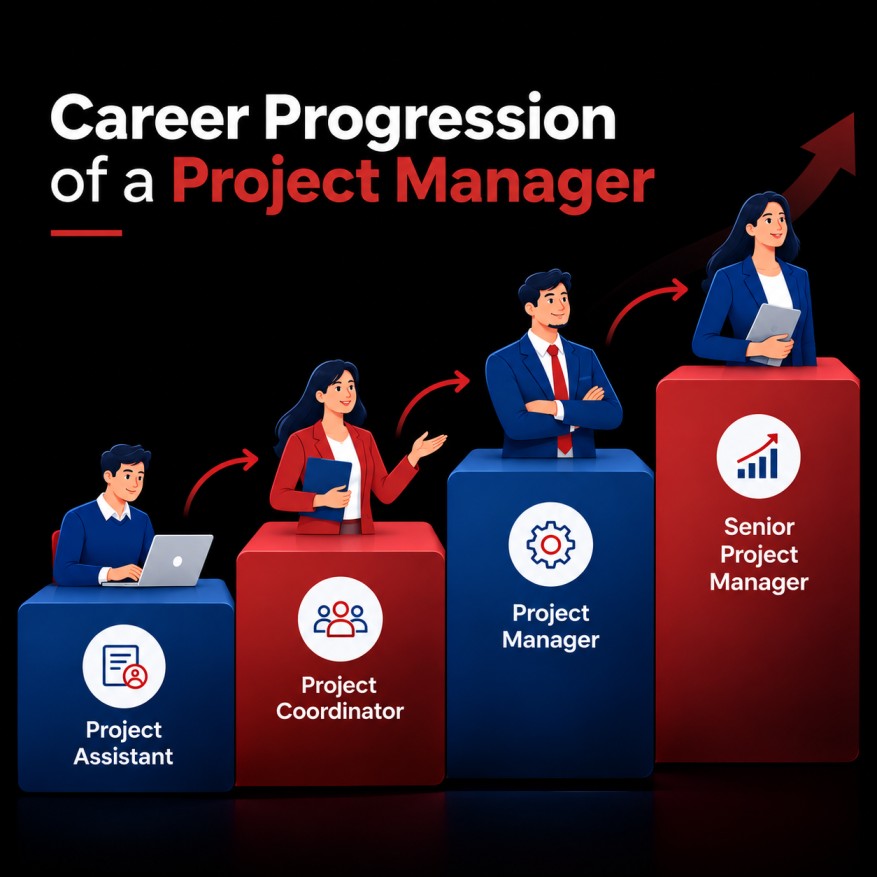
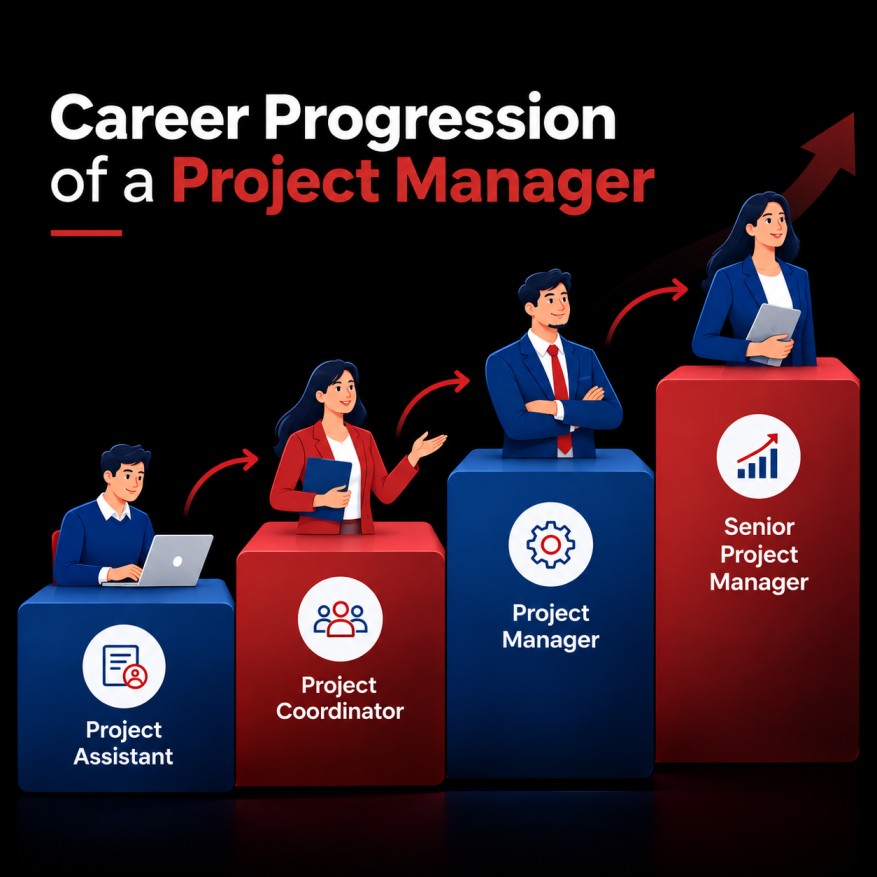
There is no need to limit your applications to project manager jobs only. Job positions such as project coordinator, project assistant, operations coordinator and implementation can be useful to provide relevant experience too.
There are internal options which can be considered as well. In case the organisation where you work currently has projects, ask for taking charge of some of the project activities.
Step 8: Moving towards Project Manager Positions
After gaining practical experience, developing skills and working on more complicated projects, applying for project manager positions becomes possible.
Your progression might look like this: